Extension Foundation
  • News
    • Funding Opportunities
  • About
    • Team & Board of Directors
    • Find Extension in Your State
    • Extension Acronyms
    • Contact
  • Member Benefits
    • Current Members
    • Professional Development
    • Leadership and Team Development
    • Campus
      • Campus Procedures
      • Catalog
    • Member Solutions
    • Video Resource Library
  • National Initiatives
    • AgriProspects Workforce Development Network
    • EXCITE
    • FADI-EDEN
    • Impact Collaborative
    • National Program Action Teams
    • NextGen Technical Advising
    • New Technologies for Ag Extension
    • Pesticide Safety Education Funds Management Program
  • Tools
    • Extension Foundation AI
      • ExtensionBot
      • 2025 National AI Report
    • Ask Extension
    • National Cooperative Extension Project Websites
    • National Registry Of Cooperative Extension Programs & Assets
    • Connect
    • Search Extension
    • Team Health Dashboard
  • Publications
  • Services
    • Conference & Event Services
    • Extension Lab
  • Search
  • Menu Menu

Tag Archive for: extension foundation

Impact Collaborative Workbook Redesigned and Released

Announcements, News, Publications

Cover of Impact Collaborative Workbook by Extension Foundation

The Extension Foundation is excited to announce the release of its redesigned Impact Collaborative Workbook, now available publicly as an interactive PDF. This format enhances collaboration, especially for participants in a virtual Impact Collaborative method training and for participants exploring the process independently.

Established in 2014 by the Extension Foundation, the Impact Collaborative serves as a national network of Land-grant university professionals focused on empowering communities to co-create sustainable solutions through Extension programming. The initiative has evolved to meet the needs of Extension professionals, guided by their feedback.

A key feature of the Impact Collaborative is its comprehensive skills curriculum, which has trained hundreds of Extension professionals to rethink program development and serve as resources within their communities. The interactive Impact Collaborative Workbook facilitates dynamic engagement, allowing teams to collaborate effectively from different locations.

Thousands of Cooperative Extension professionals have participated in the Impact Collaborative, which plays a crucial role in delivering national programs and services. In 2023, a needs assessment was conducted to ensure the initiative continues to address the evolving challenges faced by the Cooperative Extension system.

The new interactive Workbook is now available. For more information, please visit the Impact Collaborative website.

Related Reading:

  • Engaged Program Planning for Extension Foundation Impact Collaborative Teams
  • Book Review – Lean Impact: How to Innovate for Radically Greater Social Good Review & Implications for Engaged Programming
January 27, 2025/by Charlie Pane
https://extension.org/wp-content/uploads/2022/12/Extension-Foundation-Logo-padded.png 0 0 Charlie Pane https://extension.org/wp-content/uploads/2022/12/Extension-Foundation-Logo-padded.png Charlie Pane2025-01-27 14:32:482025-01-27 18:49:15Impact Collaborative Workbook Redesigned and Released

New Report Examines Land-Grant University Capacity to Support Outdoor Recreation Economies

News, Publications

The Extension Foundation has published a new research report titled Land-Grant University Capacity to Support Recreation Economies in National Forest Gateway Communities. This study provides insights into how well Land-Grant Universities (LGUs) are positioned to promote and develop outdoor recreation economies near U.S. national forests. It also identifies specific locations that are best equipped to allocate resources for recreation economy programs.

The report aims to assess the ability of LGUs to align with a 2022 USDA memorandum of understanding (MOU), which emphasizes outdoor recreation economies as a key agency priority. Historically, recreation and tourism have not been focal program areas for Cooperative Extension, raising questions about LGUs’ readiness to engage in this space.

The assessment was conducted earlier this year by Doug Arbogast, Rural Tourism Specialist at West Virginia University, in partnership with the National Extension Outdoor Recreation Working Group (NEORWG) and the Regional Rural Development Centers (RRDCs), with support from the Extension Foundation. Funding for the project came from the New Technologies in Agricultural Extension (NTAE) program.

“In 2022, the USDA positioned the outdoor recreation economy as a top priority. Yet, LGUs have traditionally not focused their programmatic efforts on recreation and tourism,” said Arbogast. “This national assessment aimed to understand their capacity to engage in this work. Our findings reveal significant opportunities for Cooperative Extension and LGU researchers to partner with communities, fostering sustainable growth in recreation economies.”

Arbogast and his team developed a survey with input from NEORWG and RRDC members, targeting LGUs in states with national forests. They specifically reached out to Extension leaders working in Community Development program areas, gathering responses between May and June 2024. The survey explored Extension’s current and potential capacity to support recreation economy initiatives, identified research opportunities, and assessed how additional funding could expand Extension’s efforts in this sector.

The full report and associated maps are available on the Northeast Regional Center for Rural Development website.

Related Reading

  • NTAE 2023-2024 Yearbook – Q&A 
  • The NET Effect: Members of the National Extension Tourism Network Help Raise the Bar in Sustainable Tourism and Outdoor Recreation
  • NTAE – Out of the Mines Feature Story
  • NTAE – My Hometown is Cool Feature Story

Additional Publications from the Extension Foundation

The Extension Foundation continues to expand its library with new titles on topics including:

  • Creating mass media campaigns
  • Game-based education
  • Wellness strategies during challenging times
  • Curriculum innovation
  • Prescribed fire
  • Emergency preparedness and response
  • Understanding food labels
  • Building resilience for farms and farm families

Explore the complete library of Extension Foundation publications here.

October 18, 2024/by Aaron Weibe
https://extension.org/wp-content/uploads/2022/12/Extension-Foundation-Logo-padded.png 0 0 Aaron Weibe https://extension.org/wp-content/uploads/2022/12/Extension-Foundation-Logo-padded.png Aaron Weibe2024-10-18 22:20:202024-10-18 22:20:20New Report Examines Land-Grant University Capacity to Support Outdoor Recreation Economies

New Technologies for Ag Extension 2023-2024 Yearbook Now Available in the Extension Foundation Library

News, Publications

The New Technologies for Ag Extension (NTAE) 2023-2024 Yearbook is now available as the latest addition to the Extension Foundation’s publications library. This vibrant publication captures the progress of dozens of projects funded through the New Technologies for Ag Extension (NTAE)  program—a cooperative initiative between the U.S. Department of Agriculture National Institute of Food and Agriculture (USDA NIFA), the University of New Hampshire, and the Extension Foundation.

NTAE’s mission is to incubate, accelerate, and expand promising work that enhances the impact of the Cooperative Extension System (CES) in communities nationwide. It also provides scalable models that can be adopted or adapted by Extension teams across the U.S.

Spanning 72 pages and presented in an engaging, magazine-style format, the Yearbook offers a comprehensive look at how NTAE-funded projects are transforming human, environmental, and community well-being. The publication also highlights an NTAE-supported technology initiative focusing on artificial intelligence. Through illustrated feature articles, Q&A interviews, and embedded videos, readers will explore innovative efforts across key themes, including technology, climate resilience, youth development, health, and equity.

Additionally, the Yearbook highlights the critical work of ECOP’s Program Action Teams, showcasing how these teams contribute to advancing the Cooperative Extension System’s priorities.

The Extension Foundation’s library houses an extensive collection of resources, with topics ranging from technology to strengthening the resilience of farms and rural communities. Explore the entire library here and sign up to receive notifications about future publications.

October 18, 2024/by Aaron Weibe
https://extension.org/wp-content/uploads/2022/12/Extension-Foundation-Logo-padded.png 0 0 Aaron Weibe https://extension.org/wp-content/uploads/2022/12/Extension-Foundation-Logo-padded.png Aaron Weibe2024-10-18 21:27:182024-10-18 21:30:11New Technologies for Ag Extension 2023-2024 Yearbook Now Available in the Extension Foundation Library

Empower Your Team with the Healthy Teams Handbook: Build and Maintain High-Performing Collaborations

Impact, News, Publications, Success Stories

Take your teamwork to the next level with the Healthy Teams Handbook! This guide, developed by Extension Foundation’s leadership development specialist Karl Bradley, offers practical strategies and insights to build and maintain high-performing collaborative teams. Originally crafted to support New Technologies for Ag Extension (NTAE) project teams, this updated handbook is now available to help all Extension professionals.

Unlock the Secrets of Success

The Healthy Teams Handbook is designed to complement the Team Health Dashboard. The Team Health Dashboard is a research-backed tool, based on Google’s Project Aristotle. It evaluates five key aspects (“conditions”) that are essential for effective team performance: 

  • Psychological Safety: Feeling comfortable sharing ideas and opinions without fear of judgment.
  • Dependability: Meeting commitments and holding one another accountable.
  • Structure & Clarity: Having clear roles, goals, and expectations.
  • Meaning: Understanding the importance and impact of your work.
  • Impact: Knowing that your work makes a difference.

The Healthy Teams Dashboard showcases team health survey results in order to assess and monitor your team’s well-being. 

Assess, Interpret, and Improve

The Healthy Teams Handbook equips teams with tools and strategies to actively improve each of the five conditions. Gain actionable insights, access real-life success stories, and explore inspiring leadership topics to truly empower your team.

About NTAE

The Healthy Teams Handbook is supported in part by New Technologies for Ag Extension (funding opportunity no. USDA-NIFA-OP-010186), grant no. 2023-41595-41325 from the USDA National Institute of Food and Agriculture. Any opinions, findings, conclusions, or recommendations expressed in this publication are those of the author(s) and do not necessarily reflect the view of the U.S. Department of Agriculture or the Extension Foundation. Discover more about NTAE-supported work and find additional resources in the 2022-2023 NTAE Yearbook and in the Extension Foundation’s publications library.

Ready to build a stronger, more effective team?

  • Take the Team Health Survey
  • Download the Healthy Teams Handbook
  • Explore the NTAE program 

Healthy teams have more impact! Empower your team today! 

February 20, 2024/by Aaron Weibe
https://extension.org/wp-content/uploads/2022/12/Extension-Foundation-Logo-padded.png 0 0 Aaron Weibe https://extension.org/wp-content/uploads/2022/12/Extension-Foundation-Logo-padded.png Aaron Weibe2024-02-20 21:53:242024-02-20 21:53:24Empower Your Team with the Healthy Teams Handbook: Build and Maintain High-Performing Collaborations

New Extension Foundation Publication: “Pumpkin Smash Playbook”

Extension, News, Publications

The Extension Foundation has released a new title. “Pumpkin Smash Playbook” shares how the University of Illinois Extension and community partners organize and host Pumpkin Smashes, fun community events that collect pumpkins for composting. The team hosted its first Pumpkin Smash in 2019. Since then, the organization has refined the process of planning, funding, and running Smashes. This playbook details how to organize a similar event in your community.

Smashes teach people about the importance of composting and help keep pumpkins out of landfills. But they also provide Extension organizations with an opportunity to increase Extension’s visibility and reach new communities, particularly in urban areas. 

“Pumpkin Smash Playbook” was written by Kathryn M. Pereira, an Extension educator with the University of Illinois Extension. It’s the latest publication released by the Extension Foundation for the Cooperative Extension Service. It was made possible with funding from the New Technologies for Ag Extension (NTAE) grant program.

The Extension Foundation has recently added new titles to its library, including the New Technologies for Ag Extension 2022-2023 Yearbook. The 83-page Yearbook – presented in a lively magazine format – documents dozens of projects funded through the New Technologies for Ag Extension (NTAE) program, a cooperative agreement between USDA NIFA, Oklahoma State University, and the Extension Foundation. The goal of the New Technologies for Ag Extension (NTAE) grant is to incubate, accelerate, and expand promising work that will increase the impact of the Cooperative Extension System (CES) in the communities it serves, and provide models that can be adopted or adapted by Extension teams across the nation.

You can find the entire library of publications here.


October 17, 2023/by Aaron Weibe
https://extension.org/wp-content/uploads/2022/12/Extension-Foundation-Logo-padded.png 0 0 Aaron Weibe https://extension.org/wp-content/uploads/2022/12/Extension-Foundation-Logo-padded.png Aaron Weibe2023-10-17 16:08:332023-10-17 16:08:33New Extension Foundation Publication: “Pumpkin Smash Playbook”

Extension Foundation Receives USDA-NIFA Award to Maximize Biosecurity Threat Resilience

News

The Extension Disaster Education Network (EDEN) is a collaborative network of Cooperative Extension educators across the United States and territories who work to improve the delivery of education and information, and the availability of resources related to disaster preparedness, response, and recovery. Historically, this grassroots network has been aligned with the Extension Committee on Organization and Policy (ECOP) and supported by USDA-National Institute of Food and Agriculture (NIFA) through the Food and Agricultural Defense Initiative (FADI) grant.

The Extension Foundation in partnership with Washington State University, Iowa State University, and the Cooperative Extension System, will support the administration of the EDEN project. The Extension Foundation assists in aligning system-wide formal work to increase system capacity while providing programmatic services. This partnership will help Extension programs scale and investigate new program implementation methods and models.

The project will build upon and expand related outputs and deliverables of previously funded FADI-EDEN projects by maintaining a competitive grant process to support innovation and curriculum development and directed funding for 1890 and 1994 Land-grant institutions. The continued leadership with additional support from Extension Foundation will ensure the implementation of the strategic plan for EDEN developed under the previous FADI-EDEN grant administration. By doing so, the project will contribute to the ongoing efforts of the FADI-EDEN program to enhance the capacity of Extension professionals to provide research-based information and educational programs to communities across the United States in response to disasters.

This project aims to support the coordination and implementation of EDEN’s strategic plan focusing on disaster management education, targeted communication and outreach, strategic structure, and management growth. Success hinges on strengthening participation and collaborations throughout the Cooperative Extension system and strategic partnerships and enhancing the education and professional development opportunities centered on interdisciplinary expertise and multi-state education and outreach programs that provide national consistency with local flexibility, a hallmark of Cooperative Extension. In addition, success is based on using Extension Foundation services and infrastructure to serve as the backbone supporting EDEN. The goals of this project include:

  • Support EDEN Strategic Structure and Management Growth
  • Expand Disaster Management Education
  • Strengthen Targeted Communication and Outreach

According to USDA-NIFA, “the goal of the Food and Agriculture Defense Initiative Extension Disaster Education Network (FADI-EDEN) program is to maximize the resilience of the U.S. food and agriculture sector to biosecurity risks, extreme weather events and disasters, cyber threats, and other shocks. It is necessary to mitigate threats to sustain the overall competitiveness of U.S. agriculture to maintain an abundant food supply for people and livestock; to support the farmers, ranchers, and workers who drive the U.S. food and agriculture sector; and to sustain the vitality of rural communities, rural and urban agriculture infrastructure, and agricultural businesses. The FADI-EDEN program funds one Extension project that will address its priorities.”

More information and the full news release from USDA-NIFA can be found here. 

July 20, 2023/by Aaron Weibe
https://extension.org/wp-content/uploads/2022/12/Extension-Foundation-Logo-padded.png 0 0 Aaron Weibe https://extension.org/wp-content/uploads/2022/12/Extension-Foundation-Logo-padded.png Aaron Weibe2023-07-20 14:53:112023-07-20 14:53:11Extension Foundation Receives USDA-NIFA Award to Maximize Biosecurity Threat Resilience

Extension Foundation Selected by USDA-NIFA as Technical Provider for NEXTGEN Funding Opportunity

News, Newsroom, Uncategorized

The primary goal of the From Learning to Leading: Cultivating the Next Generation of Diverse Food and Agriculture Professionals Program (NEXTGEN) is to enable 1890 Land-grant institutions, 1994 Land-grant institutions, Alaska Native-serving institutions and Native Hawaiian-serving institutions, Hispanic-serving institutions, and insular area institutions of higher education located in the U.S. territories to engage, recruit, retain, train, and support students to help build and sustain the next generation of the food, agriculture, natural resources, and human sciences (FANH) workforce including the future USDA workforce. NextGen supported projects should enable student scholarship support, meaningful paid internships, fellowships, and job opportunity matching, and also facilitating opportunities to learn the processes and pathways leading to training and employment in the federal sector.

The Extension Foundation will raise awareness of the NEXTGEN program and provide technical assistance for eligible institutions to develop teams, partners, program strategies and to connect with USDA and other career opportunities. 

Dr. Dawn Mellion has joined the Extension Foundation to serve as the Program Director for this initiative. Dr. Mellion is the former Vice Chancellor for Extension at the Southern University Agricultural Research and Extension Center. 

The Association of Public and Land-grant Universities (APLU) will support the Extension Foundation in their role as a technical provider for NEXTGEN funding. Specifically, Wendy Fink, Assistant Vice President of the Office of Food, Agriculture, and Natural Resources, will serve to help connect potential institutional partners to one another. 

To learn more about the Extension Foundation’s services for NEXTGEN including upcoming webinars, please visit their website at nextgen.extension.org. 

About the Extension Foundation

The Extension Foundation was formed in 2006 by Extension Directors and Administrators. The Foundation partners with Cooperative Extension through liaison roles and a formal plan of work with the Extension Committee on Organization and Policy (ECOP) to increase system capacity while providing programmatic services, and helping Extension programs scale and investigate new methods and models for implementing programs. The Foundation provides professional development to Cooperative Extension professionals and offers exclusive services to its members. In 2020 and 2021, the Extension Foundation has awarded 85% of its direct funding back to the Land-grant university System, 100% of funds are used to support Land-grant university initiatives.

About APLU

APLU is a research, policy, and advocacy organization dedicated to strengthening and advancing the work of public universities in the U.S., Canada, and Mexico. With a membership of more than 250 public research universities, land-grant institutions, state university systems, and affiliated organizations, APLU’s agenda is built on the three pillars of increasing degree completion and academic success, advancing scientific research, and expanding engagement. Annually, member campuses enroll 5.0 million undergraduates and 1.3 million graduate students, award 1.3 million degrees, employ 1.3 million faculty and staff, and conduct $49.5 billion in university-based research. 

September 29, 2022/by Aaron Weibe
0 0 Aaron Weibe https://extension.org/wp-content/uploads/2022/12/Extension-Foundation-Logo-padded.png Aaron Weibe2022-09-29 11:00:492022-09-29 11:00:49Extension Foundation Selected by USDA-NIFA as Technical Provider for NEXTGEN Funding Opportunity

Extension in the 21st Century: A conversation with Chuck Hibberd

Extension, Innovation, News, Newsroom

Charles “Chuck” Hibberd is an emeritus professor of the University of Nebraska, where he held several academic positions, including Dean of Cooperative Extension. His email tagline reads “Chuck Hibberd, retired Extension Director (but not done yet).”

Dr. Chuck Hibberd. Image credit: University of Nebraska-Lincoln.

He directed the University’s Panhandle Research and Extension Center for 13 years. Chuck also served as Extension director, associate dean of agriculture, and assistant vice president of engagement at Purdue University. He began his career at Oklahoma State University as a faculty member in the animal science department. A former chair of the Extension Committee on Organization and Policy (ECOP), Chuck was inducted into the NIFA Hall of Fame in 2019. Chuck currently serves on the board of the Nebraska Community Foundation.

A native of Lexington, Nebraska, Chuck received his BS in agriculture (animal science) from the University of Nebraska-Lincoln and his MS and Ph.D. degrees (animal science and animal nutrition, respectively) from Oklahoma State University. 

Chuck recently finished his first year as an Extension Foundation Catalyst. Catalysts are Extension experts who support New Technologies for Ag Extension (NTAE) projects chosen to participate in Extension Foundation’s project accelerator program. This program is part of a cooperative agreement with USDA-NIFA. In Year One (2019), the Extension Foundation selected 4 projects for participation. In Year Two (2020), 8 projects were chosen from among 33 competitive nominations across the Cooperative Extension system. Year Three projects will begin in Fall 2021. You can learn about past NTAE projects here.

We recently sat down for a conversation about his work as a Catalyst and what he thinks might lie in Extension’s future.


Can you tell us a little about your work as an NTAE Catalyst?

This was my first year as a catalyst. I enjoy working and interacting with people and helping them achieve their dreams and goals. Early in my career, I was an advisor for undergraduate students at Oklahoma State University. I learned early that these kinds of conversations are never about me but rather always about the person I am interacting with. It takes sincere listening and seeking to understand and connect in some genuine way to know where people are and where they want to go. 

I used the same approach with my leadership team in Extension (twice in Nebraska and once in Indiana). I don’t believe in top-down leadership; I believe in consultative leadership, and I want decisions to be informed by the best thinking of the team of people I surround myself with. 

I learned a great deal about coaching and mentoring while serving in Nebraska Extension. About twenty years ago, the organization decided it wanted administrators to be better coaches and mentors. We went about the business of identifying three employees who became certified professional performance coaches. These individuals led workshops for those who desired to be a more effective coach/mentor. I was in the first cohort. That experience changed my view of the way we should interact with people genuinely. It’s not only being authentic but having a method and process. 

Performance coaching has three components. First is clearly identifying and articulating the problem, issue or opportunity. Then, listening, seeking to understand. Asking powerful questions to help individuals find their own solutions is critical. I don’t propose solutions but rather ask the kinds of questions that encourage people to dig deep to consider what they want to do and how they might accomplish their work. A third and essential part of coaching is accountability. As I draw near to the end of the first conversation, I might ask, “When can I check in to see your progress?” There is a scientific method to coaching and mentoring that I bought into early, which I’ve tried to use throughout my career. I’ve used this same approach in interviews with potential employees and when working with constituents. It’s an integral part of my interactions with NTAE fellows and teams: asking reflective questions that encourage them to consider their challenges, experiences, and opportunities. I have found these sorts of reflective practices one of the most potent ways to connect with people.


What results/impacts have you seen?

Every fellow and every team is different. They have different project aspirations and are starting in a different place. One team I worked with initially designed, developed, and delivered the project four years ago; another team worked together for two years before NTAE. Two of the teams [I worked with] are relatively new and, in one case, are really still in the formation phase of their development. 

It’s a fun thing for me to interact with these people, listen, coach and mentor them, and ask powerful questions that help them get from their point A to their point BCD. While every team is unique, each has progressed in this NTAE project year. They have progressed differently because they have other interests and aspirations. That’s what this experience is about.

Some have struggled. This is hard work. I’ve seen people be emotional and have experienced their deep questioning of themselves, their team, and their project. I’ve also seen them all move forward. One of the things Extension Foundation is doing is pushing these teams to achieve their potential, whatever that is for them. One of the most rewarding things for me is to watch a fellow/team take what was an idea, aspiration, or hope and turn it into something better than they ever could have imagined because of the input and resources that the Extension Foundation offers. I don’t think many people thought about market research as a real thing they could do. Instead, they’ve had a chance to use market research to better design how they engage learners, improve program delivery, or the circumstances under which they create learning examples. That’s just one example. There are many more services that our key informants (KIs) offer. They really inspire fellows and teams to think differently about their work. 

Every one of our KIs is an Extension professional. They are well-trained, well-educated, highly experienced with great insight. They have so much to offer fellows and teams. While each KI has a specific role, they may also have perspectives and experiences beyond that that add value. Extension Foundation is surrounding fellows and teams with people who care, are smart, and are experienced. These folks have a servant mentality: they do whatever they can to help fellows and teams achieve their dream, their aspirations. It’s an enjoyable environment to work in.


You spent decades in Extension, in many places, working at many levels. What have been the most significant changes you’ve seen during your career? 

In my first twelve years as a faculty member at Oklahoma State, I did not have an Extension appointment. I had a research and teaching appointment. Yet, I did a lot of Extension work because the research, experiences, and relationships built in the classroom put me in a position to share in various settings – mostly Extension settings – our research and what we were learning from that work. 

My first job in Extension was as a director/administrator of an Extension and research center in Scottsbluff, Nebraska. It was a natural and easy transition from my work in a teaching and research role. I will always be a teacher. It doesn’t matter whether I’m working with an NTAE fellow and team, a student, an employee, or interviewing someone for a job…I’m teaching and learning. That drives me forward. 

In retrospect, much of my early Extension work – in 1994 in the Panhandle region of western Nebraska –  was very transactional. It was important work, but it was transactional, characterized by “sage on the stage,” one-way delivery, here’s the answer/strategy/method, take it or leave it kind of work. It was low engagement with learners and constituents. 

A fascinating thing happened about five years into my tenure at Scottsbluff. We had a crackerjack research and Extension team working on sugar beets. They were globally known for their expertise and accomplishments.  A sugar company approached us with a request to run trials to demonstrate our technology side-by-side with twelve farmers growing sugar beets using the company’s guidelines. We applied our technology and equipment, using our research knowledge and experience. Not a perfect scientific method, but that’s what we had. At the end of the season, the farmers beat us in eight of the twelve trials. 

Humbling, right? What it really meant is if we were going to be effective in our roles, we couldn’t do to or for, but with. We needed to expand our relationships, build trust, and find ways to engage people. That kind of strategy has been a theme of mine throughout my career: it’s an engagement and transformational practice based on relationships, trust, and mutual benefit –  all those things that make the work more powerful. 

In my last eight years as dean and director of Extension in Nebraska, we hired about 80 people. In the old days, most of these folks would have come with some sort of Extension or 4-H experience, which gave them a good sense of the job they were interviewing for. By 2012, that was not the case. People were coming to Extension because they saw an opportunity to engage people; co-develop solutions and strategies; work together with clients and constituents, and develop more robust solutions than ever before. The people we hire now are very aspirational, are continuously learning, are very entrepreneurial in how they approach and resource their work, and create things that have never been created before. 

If you want to change the world, Extension is a good place for you to work. You will have that opportunity to do work that matters. I see incredible talent, inspiration, and drive in Extension today. I see that everywhere. Extension organizations are finding and hiring people that have this mindset. It’s exhilarating.


How can Extension best prepare for periods of disruption? Are there particular skill sets or mindsets that you think Extension professionals should develop?

The first and most crucial part is that we focus our efforts on things that matter. We need to bring diverse resources (people and expertise) from inside and outside of the organization to bear on those really critical questions, challenges, and opportunities facing our constituents. And we need to do it in partnership with them. That has been one of the most powerful innovations I’ve seen in Extension: creating co-learning environments. If we discount the knowledge and experience of those in the communities we work with, we’re going to get it wrong most of the time. So let’s work together and learn together. We’ve changed our field days in Nebraska. We’ll put together a panel of 4-5 people, and 3-4 of those will be non-Extension folks: farmers, industry representatives, or other partners. Everybody has knowledge, perspective, and experience.

I think we build resilience by working on important issues, by working together in partnership with our constituents to build trust and create mutual benefit. At the end of the day, we want to say that we couldn’t have done what we did without our partners and have them say the same about us. That creates true mutual benefit and value.

COVID has challenged us to do that better than ever before. We had to prove that we could pivot. In Nebraska – and I would guess it was the same in most places  – there was a cadre of Extension professionals who took what they always did and just moved it to Zoom. But there were a large number of Extension professionals who created something new. They figured out how to use technology in really engaging ways and how to do blended programs using technology and engagement strategies that protected people from the pandemic and created robust learning experiences. So many inventive solutions and techniques were developed, deployed, and learned from during the pandemic. This has been another way Extension demonstrated that we could pivot. I’m not sure we could have done this thirty years ago. It’s partly due to hiring, ingenuity,  and the bottom-up approach most Extension programs are using today. We can pivot, adapt, and keep going.

The Scott Reeds of the world have figured out that Extension can’t just be for the college of agriculture. It needs to be for the entire university and function as the land-grant universities’ lead engagement arm. Extension should strive to build partnerships and capacity across the whole campus. Doing that well means Extension is positioned as the go-to organization and not just focused on outreach. Extension work should be about genuine engagement that results in deep relationships and reciprocal benefit. We have to engage locally in trust-based opportunities.

The land-grant universities that are taking advantage of those ideas are the ones that are positioning Extension to be highly valued as a critical component of the larger university.


Where do you think opportunities lie for Extension now and in the future?

The pace of change is so fast that we really need to design ways to stay even with – or get in front of (when possible) – the kinds of advances that are occurring. We have to be open to the reality that advances that will benefit Extension and our constituents are not all coming from the university system. How do we build deep partnerships and collaborations with others? We may not be the leaders; we may be key participants or play another role.  

The Centers for Disease Control (CDC) enlisted Extension Foundation to work on vaccine hesitancy as one of its partners. These kinds of things happen because of relationships. The CDC has deep expertise but doesn’t have the 3,000+ county network to deliver the education and engagement pieces necessary to address this question of vaccine hesitancy. Extension does.

I serve on the Nebraska Community Foundation (NCF) board. NCF – unfettered by any of the rules or regulations of working for a university – is doing fantastic development work on the ground in communities across Nebraska. Nebraska Extension has developed a powerful collaboration with the NCF, sometimes in partnership with and sometimes in service to that organization. 

I think we’ll find going forward, if we want to continue to be a key player and to be viewed as resourceful, we’ll ask this: “What does it mean to be an Extension professional with a  true entrepreneurial mindset?” That’s what we’re talking about here: we’re not sitting back waiting for things to happen. We’re pushing the edge and taking risks. Our most progressive constituents want us to take risks and try things on their behalf. How do we do that in a way that takes advantage of opportunities, technologies, tools, and different ways of thinking out there right now? 

One way is to continue to remain current (and get ahead of the curve) and keep hiring people with that entrepreneurial mindset, who don’t mind failing forward, going for it, and asking for forgiveness rather than permission. Those are our opportunities. One of the things about those kinds of ideas is that it’s going to ask us as leaders to also change how we think about the work we do and how we lead our organization. The Extension organization of the future will be much more driven by our employees, the people on the ground doing the work. Our job is to create a culture and hire people who can do this kind of work. We need to try to catalyze where we can and where we can’t, get out of the way because they’re going to figure it out.


What are you particularly excited about right now?

I’ve been doing this work for almost a year. The catalyst’s role for me was deer in the headlights from August through November or December. Now I feel as if I have my arms around it. But that doesn’t mean I’m entirely comfortable in the role because I always push myself to be better in my work. But it’s incredibly fun.

I’m very curious about the next group of NTAE fellows and teams. I think there may be some very different kinds of topics and themes. Just like this year, I think we will find some fellows who push us as much as we push them and who really challenge us to think differently about how we do this work and how we support high-impact teams. This is awesome.  

Scott Reed and I have been working on framing what a new catalyst onboarding might look like. That’s been a blast. Scott, Fred [Schlutt], and Jimmy Henning created the catalyst role two years ago from scratch. Thank goodness they did that for Rick Klemme and me. We have new catalysts coming in, and I’m excited to work with them. We don’t ‘train’ new catalysts, but we try to inform and inspire (two “I” words I really like). The goal is to help them achieve what they would like to accomplish in their role as catalysts. We will continue to diversify our team and expertise.

On a different note, we were involved this week in an ECOP meeting and some APLU meetings with the APLU Board on Agriculture Assembly, composed of the deans and vice-chancellor leads for agricultural and natural resources across the country. We’ve also been in conversation with the new director  – Carrie Castille – of the National Institute of Food and Agriculture (NIFA). The discussions in this space and especially in the context of the Extension Foundation’s work are more exciting than ever before. There is a genuine openness to collaborating and working together without concern about who gets the credit. There seems to be a strong interest in invention and innovation and addressing the challenges we face trying to figure out how to do that in this complex environment in Washington DC, our land-grants, ECOP, and the Extension Foundation.

I’m really energized and very hopeful. I did that role: I was ECOP chair four years ago. One of the things we talked about a lot is that we have these big ideas. How do we make them happen? 

This year NIFA provided funding through the Extension Foundation to ECOP program priorities that will be led by people who have thought a lot about the area they are going to work in. This is new ground, a new opportunity, and a way to provide national leadership to an Extension system that needs strong, informed, and opportunistic national leadership. I’m optimistic about that as well.


What books, podcasts, etc., are currently informing your thinking?

I’m currently reading four books, including How to Be an Antiracist by Ibram X. Kendi. We just drove to and from Colorado and listened to Caste: The Origins of Our Discontents by Isabel Wilkerson. I’m also reading Forty Chances: Finding Hope in a Hungry World, written by Howard Buffet. If you want to learn to think differently about how we work with impoverished people and countries to help them improve subsistence farming and food production, you’ll find this a fascinating book.

I just finished Once a Warrior: How One Veteran Found a New Mission Closer to Home by Jake Wood. Jake is a combat veteran and the founder of Team Rubicon. This non-profit organization has created a way to mobilize veterans to respond to disasters to communities in a deliberate and organized manner. Veterans are highly skilled, and the Team Rubicon model enables them to deliver very high-level service and engagement with people suffering from disasters. It’s a fascinating book.

I also have a circle of friends and co-workers who challenge me regularly. We ask each other hard questions. I’m a continuous learner…that’s what I do! I’ve learned so much from the fellows and teams, too. Their ideas and inventiveness are part of why this work is so rewarding.


Related Reading:

A Conversation with Dr. Scott Reed, Extension Foundation Catalyst

Accelerating Success: Q&A with Dr. Fred Schlutt

August 9, 2021/by Aaron Weibe
https://extension.org/wp-content/uploads/2022/12/Extension-Foundation-Logo-padded.png 0 0 Aaron Weibe https://extension.org/wp-content/uploads/2022/12/Extension-Foundation-Logo-padded.png Aaron Weibe2021-08-09 19:43:212021-08-09 19:43:21Extension in the 21st Century: A conversation with Chuck Hibberd

Extension Foundation 2021 Mid-Year Update

News, Newsroom

We are excited to provide you with a mid-year update about the Extension Foundation and our progress towards helping Cooperative Extension (CES) make a greater impact on local issues. 

Funding to the Cooperative Extension System (2020-2021)

  • $22.4M in 2020-2021
    • 85% to LGU’s
    • Total of $19M to LGU’s across Extension program areas

Funding Sources (2020-2021): 

  • $2M EPA Pesticide Safety Education Funds Management Program (PSEFMP)
    • 85% to LGUs
  • $4.9M USDA-NIFA New Technologies for Ag Extension (NTAE)
    • 45% to to LGUs
    • 55% to capacity-building solutions
    • Including over $800K to the 7 ECOP Priority Action Teams
  • $8.9M CDC/USDA-NIFA Extension Collaborative on Immunization Teaching & Engagement (EXCITE)
    • 95% to LGUs
  • $6.6M received by NTAE and Impact Collaborative teams across health, workforce and Ag & Natural resources
    • 100% to LGUs

Our Impact

  • Allied with ECOP, CDC and USDA-NIFA for the EXCITE $9.9M interagency effort–the Foundation is providing solutions to the programmatic needs for 96 projects; seamlessly delivered 95% of funding to the Cooperative Extension System (CES)–enabling critical education outreach through 72 LGUs for underserved and vaccine-hesitant populations. 
  • Delivered NTAE program acceleration and Key Informant services funded by USDA-NIFA through OK State with nine LGUs; Twelve CES projects to date unleashed new funding, expanded resources and private sector partnerships–returned to institutions stronger and ready to deepen community impact. 
  • Developed digital infrastructure to support CES during the pandemic–enabling user-generated content, resource-sharing and advertising; created 5K accounts, advertised 2K+ events–engaged 2.1M public with CES content across the country.
  • Launched first ever National Registry of CES Programs and Assets–registered 150 programs in the first two months to speed up collaboration and access to a living database of efforts nationwide–supports rapid-response to system-wide funding opportunities (e.g., EXCITE).
  • Bolstered collaboration among 52 LGU Pesticide Safety Education Programs–delivered $1M in EPA funding to 52 LGUs, average award of $18K while expanding capacity for applicator training and safe application.
  • Actively supporting the incubation of innovation for 57 member institutions; 250+ CES project teams served; 175 facilitators trained; $6M+ in funding awarded to Impact Collaborative teams.
  • Connecting three institutions to realize 1890’s capacity-building academy; coordinated 24 innovation coaches to assist 15 teams; presented 20 virtual sessions for 2nd cohort–improved five aspects of team effectiveness by 6.2% average in six months, hit 96% satisfaction rating; offering regional assistantship for 3rd cohort.

Extension Foundation History

Created by Extension Directors and Administrators starting in 2001, Extension Foundation facilitates and supports the success of Extension professionals and systems. The bylaws state the Foundation’s purpose is: Helping Cooperative Extension professionals make a visible and measurable impact on local issues. A timeline of our history including the logo change from eXtension to the Extension Foundation is available here. 

July 28, 2021/by Aaron Weibe
0 0 Aaron Weibe https://extension.org/wp-content/uploads/2022/12/Extension-Foundation-Logo-padded.png Aaron Weibe2021-07-28 12:54:292021-07-28 12:54:29Extension Foundation 2021 Mid-Year Update

RFA: New Technologies for Ag Extension Accelerator Program Year 3 Projects

News, Newsroom


REQUEST FOR APPLICATIONS
Accelerator Program Year 3 Projects
Funded by a Cooperative Agreement with the USDA-NIFA New Technologies for Ag Extension Program awarded to Oklahoma State University

SUMMARY: Project/program team leaders are invited to apply to this NTAE Program Accelerator. By the end of one year, accelerated programs are stronger, better-resourced, and more easily adopted or adapted by others across the Cooperative Extension system to serve the needs of people and communities.  For one year, project leaders and teams are partnered with the Extension Foundation and are coached to identify new possibilities and strengthen their planned impact. Each team receives support to create materials and experiences that engage Extension resources to speed development and generate a change where it is desired. In addition to stipend funding, the full value of this program is in the accelerator experience. Awardees can expect robust and productive interaction with a group of catalysts and key informants in a mentoring role to help the leader and their team grow professionally over the course of a one- year partnership. 

AWARD DATES: September 1, 2021 -August 31, 2022

ELIGIBILITY: The RFA for NTAE Year 3 Projects is open to all Land Grant University Cooperative Extension professionals from 1862, 1890, and 1994 institutions. LGUs may submit more than one project nomination. 

AWARD: Approximately eight projects will be awarded.

  1. Awardees receive $10,000 in the form of a stipend and/or salary and benefits of up to 10K. Indirect costs are not allowed on these funds. Recipients of this funding can be the team leader, team members, or support personnel.
  2. Awardees receive the mentorship of an Extension Foundation Catalyst throughout the 1-year Accelerator Program.
  3. Awardees receive support from Key Informants that is customized to each project’s needs including, but not limited to, team leadership development, communications and marketing/market research, evaluation planning, partnership development, digital engagement, professional development delivery, and publishing of project methodologies and support materials.
  4. The one-year journey for the project leader and team will be unique. Please expect the time commitment for the team leader to be as much as 10 to 20 percent (4-8 hours per week) on average over the course of one year. 

REQUIREMENTS: 

  • All applications must align with the USDA Strategic Goals USDA Strategic goals and align with Extension Committee on Organization and Policy (ECOP) program priorities (ECOP) Program Priorities.
  • Projects must be in the early stages of maturity and have a high potential for making a significant local/state impact, and by providing a model for adoption by Extension professionals regionally or nationwide. This means the project is likely to have objectives completed, audiences identified, potential outcomes identified, and implementation planned or in an early stage.
  • Each application should identify a team leader (a Fellow) for the project who will serve as the primary contact.
  • Teams must have at least three (3) members including a project/team leader.
  • All applications must have the support of the Extension Director/Administrator.

TIMELINE: 

  • May 10, 2021 Application Workshop for those interested in strengthening their application
  • May 12, 2021 Application Workshop for those interested in strengthening their application
  • July 16, 2021 Applications Due
  • August 13 Approximate time for award notifications  

AWARD DECISIONS: Award decisions will be considered final. Award decisions will be published on the Extension Foundation Website and emailed to each institution individually.


AWARD RECIPIENTS: Awardees will participate in quarterly project meetings along with meetings as needed to work with Catalysts and access Key Informant resources. Quarterly reports are required. 


APPLICATION ACCESS: The application is available at https://applyextension.smapply.io/ The proposal will be submitted using an online application linked to  our Application Portal. Applications can be initiated, saved in progress, and completed at a later date. If you do not already have an account in our system, the first step will be to obtain an account by using the registration link in the Application Portal. You can invite other team collaborators to assist in building and submitting your application.

APPLICATION GUIDE: The Application Guide will prepare you to submit your application and provide resources to frame your proposal.  NTAE Application Guide


CONTACT INFORMATION: 

Tira Adelman

Extension Foundation

Grants and Project Manager

tiraadelman@extension.org

FURTHER INFORMATION: 

The New Technologies for Agricultural Extension (NTAE) cooperative agreement with the USDA National Institute of Food and Agriculture (NIFA) through a partnership with Oklahoma State University will enter its third year on September 1, 2021. A key program in the cooperative agreement is the Program Accelerator. The Program Accelerator is a unique partnership between a project/program team and the resources of the Extension Foundation for a year of rapid growth and progress resulting in expanding the team’s local impact and national potential. Our unique methods and team of catalysts and key informants work uniquely with each team to produce scalable, better resourced, and more effective programs and community-based initiatives through a one-year boost of additional support. You can learn more about NTAE projects taking advantage of the Program Accelerator at https://impact.extension.org/ntae/.

Applications for the NTAE Program Accelerator for Year 3 will need to align with the USDA Strategic goals and be early-stage/high potential projects. In Year 3, projects are also sought to align with the Extension Committee on Policy (ECOP) Program Priorities to bring greater support for projects serving multiple national initiatives.  At least one proposal is desired that advances the understanding of an engaged university. Such evidence includes 1) partner programming with nontraditional university units (colleges of liberal arts, engineering, medical school, etc.) and/or 2) co-creation of project design with partners, audience, and/or community members.


May 5, 2021/by Aaron Weibe
0 0 Aaron Weibe https://extension.org/wp-content/uploads/2022/12/Extension-Foundation-Logo-padded.png Aaron Weibe2021-05-05 11:27:022021-05-05 11:27:02RFA: New Technologies for Ag Extension Accelerator Program Year 3 Projects
Page 1 of 212

Tag Archive for: extension foundation

New Technologies for Ag Extension 2024-2025 Cover

New Technologies for Ag Extension 2024-2025 Yearbook

Annual Report 2024

Extension Foundation 2024 Annual Report

Impact Collaborative Workbook

Impact Collaborative Workbook

Five Tips for Creating Accessible Documents

Extension Essentials: Five Tips for Creating Easy-to-Access Documents

2024 Yearbook

New Technologies for Ag Extension 2023-2024 Yearbook

Extension Evaluation Matters

Extension Evaluation Matters: 2nd Edition

Annual Report 2024

Extension Foundation 2023 Annual Report

Healthy Teams Handbook

Healthy Teams Handbook

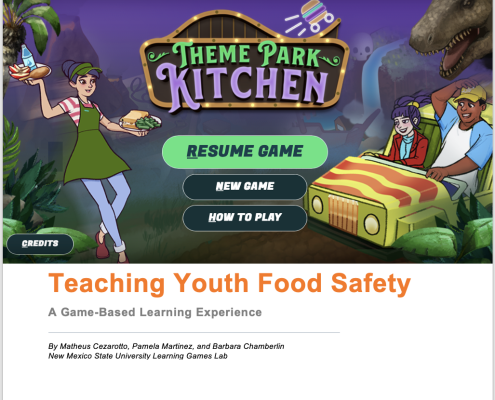
Teaching Youth Food Safety

Teaching Youth Food Safety – A Game-Based Experience

Professional Development Need Assessment Report

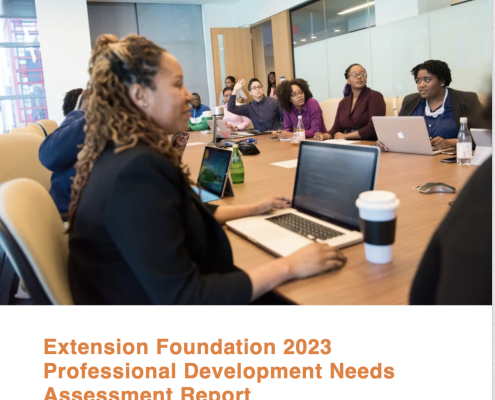
Extension Foundation 2023 Professional Development Needs Assessment Report

Page 1 of 41234
Facebook
LinkedIn
Twitter
SoundCloud

Sign up for our Newsletter

Stay up to date with the Extension Foundation

subscribe

Quick Links

Find Extension in Your State
Search Extension
Impact Collaborative
Connect Extension

About
Team & Board
Annual Report
Contact Us

Membership
Campus
Ask Extension
Tools

Privacy Policy
Accessibility Statement
Terms of Use
Careers

Extension Foundation Logo

Our mission is to empower a national network of community-based educators, volunteers, and partners to turn knowledge into real-world solutions for stronger communities and people.

Terms of Use

Cooperative Extension Logo

The Extension Foundation is a nonprofit established in 2006 by Extension Directors and Administrators nationwide. Extension Foundation is embedded in the U.S. Cooperative Extension System and serves on Extension Committee on Organization and Policy (ECOP).

USDA National Institute of Food and Agriculture

This website is supported in part by New Technologies for Ag Extension (funding opportunity no. USDA-NIFA-OP-010186), grant no. 2023-41595-41325 from the USDA National Institute of Food and Agriculture. Any opinions, findings, conclusions, or recommendations expressed in this publication are those of the author(s) and do not necessarily reflect the view of the U.S. Department of Agriculture or the Extension Foundation.

Sign up for our Newsletter

Stay up to date with the Extension Foundation.

Subscribe
© 2026 Extension Foundation. All rights reserved.
  • Facebook
  • X
  • LinkedIn
  • Soundcloud
Scroll to top