Extension Foundation
  • News
    • Funding Opportunities
  • About
    • Team & Board of Directors
    • Find Extension in Your State
    • Extension Acronyms
    • Contact
  • Member Benefits
    • Current Members
    • Professional Development
    • Leadership and Team Development
    • Campus
      • Campus Procedures
      • Catalog
    • Member Solutions
    • Video Resource Library
  • National Initiatives
    • AgriProspects Workforce Development Network
    • EXCITE
    • FADI-EDEN
    • Impact Collaborative
    • National Program Action Teams
    • NextGen Technical Advising
    • New Technologies for Ag Extension
    • Pesticide Safety Education Funds Management Program
  • Tools
    • Extension Foundation AI
      • ExtensionBot
      • 2025 National AI Report
    • Ask Extension
    • National Cooperative Extension Project Websites
    • National Registry Of Cooperative Extension Programs & Assets
    • Connect
    • Search Extension
    • Team Health Dashboard
  • Publications
  • Services
    • Conference & Event Services
    • Extension Lab
  • Search
  • Menu Menu

EXCITE at National Health Outreach Conference

Impact, News, Success Stories

The 2025 National Health Outreach and Engagement Conference (NHOC) was hosted by the University of Nebraska–Lincoln and featured workshops, panels, and poster sessions exploring innovative approaches to health promotion through collaboration and partnerships. This year’s theme, “Rooted in Partnerships: Growing Collaborations for Health Promotion,” highlighted the importance of multi-sector partnerships and collaborative efforts in implementing programs and policy, systems, and environmental (PSE) change strategies that promote health for all.
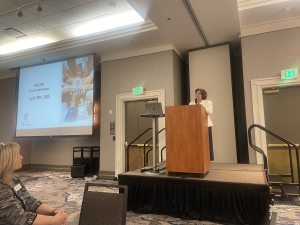
Project Director Michelle Rodgers Opening Remarks at the Pre-Conference

Project Director Michelle Rodgers Opening Remarks at the Pre-Conference


EXCITE Pre-conference: 

The Extension Collaborative on Immunization Teaching & Engagement (EXCITE) hosted a pre-conference session on the morning of April 28, 2025, just before the official start of the NHOC. Funded by the USDA National Institute of Food and Agriculture and the CDC, EXCITE supports projects that address health disparities in rural communities and areas with less access to resources.

Attendees included members of the EXCITE national program team, representatives from funded projects at Land-grant Universities, and pharmaceutical company representatives interested in this work. The session provided an opportunity to share successes from two recently funded initiatives focused on enhancing immunization education and awareness within Extension programming.

These initiatives aim to integrate immunization education into diverse Extension programs and develop innovative strategies for raising awareness. The EXCITE: Adult Immunization Education Integration Project supports incorporating immunization topics into existing program series. At the same time, the EXCITE: Adult Immunization Awareness Messaging Integration Project focuses on developing tools and approaches to strengthen education and engagement efforts. Both projects lay the groundwork for a more holistic health promotion of immunization education by embedding it in Extension programming.

EXCITE Teams Networking at the Project Fair

EXCITE Teams Networking at the Project Fair

Teams showcased the curriculum, materials, toolkits, and training they are developing—resources that will be made publicly available this fall after the projects conclude in August. Integration teams gave 10-minute Ignite-style presentations to provide an overview of their projects, while awareness teams shared materials in a tabling format, encouraging informal discussion and networking.
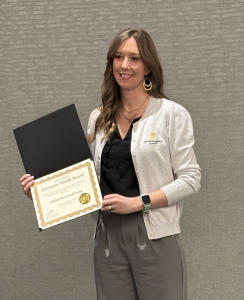
Lindsey McConnell Soong, Idaho Extension, Accepting NHOC Award

Lindsey McConnell-Soong, Idaho Extension, Accepting NHOC Award


EXCITE Teams Recognized at NHOC:

At the National Health Outreach and Engagement Conference, the Idaho EXCITE team was honored with a 2025 Jeanne M. Priester Extension Health Award. Joey Peutz and Lindsey McDonnell-Soong from University of Idaho Extension received the award for their “Competency in Community Health Systems” initiative. Recognizing that poverty creates significant barriers to preventive health behaviors, the team began integrating poverty competency into Idaho’s public health system through their third EXCITE-funded project in 2022. This approach helped staff evaluate and adapt existing systems and policies to better serve populations with reduced access to resources, resulting in more sustainable and effective change. This award highlights how EXCITE projects address the root causes of vaccine hesitancy by fostering deeper community understanding and responsive engagement with all members of the community.

Several EXCITE teams participated in the poster session at NHOC, showcasing the impact of their past immunization education efforts. Teams from the University of Kentucky, Michigan State University, and the Virginia Cooperative Extension System shared highlights of their work, including strategies, lessons learned, and measurable outcomes in their communities. Their displays demonstrated the continued value of Extension-led public health initiatives and the role of trusted messengers in improving vaccine confidence and access.

Reflection:

The 2025 NHOC was a meaningful opportunity to support, celebrate, and learn from the EXCITE teams working at the intersection of public health and Cooperative Extension. From in-depth pre-conference discussions to national recognition and peer-to-peer exchange, the conference highlighted the continued value of collaboration, innovation, and local engagement. We’re grateful to the CDC, USDA NIFA, and all the EXCITE teams who made this gathering a success.


___________________________________________________________________

Learn More About the Integration Projects Presented at NHOC

During the preconference, Integration Project teams shared highlights from their work through lightning presentations and an interactive fair session. Explore the following summaries to learn more about each team’s approach and achievements.


EDUCATION INTEGRATION PROJECTS—Ignite Presentations


From Hesitation to Confidence: Innovative Strategies for Adult Immunization Education in Rural Communities Arkansas University

Heather Wingo, Jessica Vincent, and Amber Hairston

Leveraging the expertise of County Extension Agents and the structured “How to Talk to Your Doctor HANDbook,” the program develops a nuanced approach to vaccine education. The project seeks to bridge the gap between community concerns and public health goals by creating a supportive, non-judgmental communication framework, ultimately improving vaccination rates and health outcomes in rural Arkansas.

Continuing Education for Oregon’s Community Health Workers: Empowering Adult Vaccination Messenger Efficacy

Roberta Riportella and Robin Maille

An online, continuing education (CEU) resource for Traditional Health Workers (THWs) to be messengers of adult immunization information with their clients. The 2 CEU course develops THW knowledge, skills, and attitudes (KSA) to communicate information with adult clients and peers about vaccines and vaccinations. Immunization-literate THW clients and peer communities will likely contribute to improved vaccination intention/uptake rates and infectious disease control outcomes.


Integrating Adult Immunization Education into Virginia Cooperative Extension’s Balanced Living with Diabetes Program

Kristina Jiles and Kathy Hosig

Balanced Living with Diabetes (BLD) is a community-based type 2 diabetes lifestyle management program for people with type 2 diabetes to help them better manage their diabetes and prevent diabetes complications. Adult immunization education was integrated into the program, where participants receive information on the importance of vaccination for people with diabetes and speak with their healthcare provider about being up-to-date on vaccines. The team also developed an online module that was made available to BLD participants during the interim period to learn more about vaccines to protect their health.


Integrating Adult Immunization Education into the Junior Master Wellness Volunteer Program in Mississippi

Holli Seitz and Jasmine Harris-Speight

The Junior Master Wellness Volunteer (JMWV) program is a community health education youth volunteer program that increases youth health literacy, enhances youth health knowledge, and prepares youth to deliver community health interventions and advocate for healthier communities. The development of the curriculum includes the development of teaching materials, participant materials, activities, and an online module to be incorporated into an online version of the JMWV program.

Foundations of Climate Change and Health Adaptation

Kent Boyd and Vanessa da Silva

The University of Minnesota Climate Adaptation Partnership (MCAP) and School of Nursing, in collaboration with Extension and health professionals from the University of Arizona, plan to develop and pilot a new “Foundations of Climate and Health” curriculum with the versatility for incorporation in varied Extension programs across the nation. The curriculum will include a detailed guide and sample agendas for instructors describing ways to incorporate the climate impacts on health, increasing adaptation and resilience, and communicating complex and polarized topics, such as climate change and vaccinations, throughout Extension programs.

Idaho’s EXCITE-Integration Project: Poverty-Informed Strategies for Immunization Education

Lindsey McConnell-Soong and Joey Peutz

Building on its prior success training 132 public health professionals in poverty competency, the University of Idaho is expanding its efforts through two new initiatives. A revised training for general audiences will include a case study illustrating the application of poverty-informed practices to immunization education. In addition, a new workshop curriculum tailored for immunization educators will highlight effective strategies from the earlier project. These workshops will be piloted in all seven Idaho health districts, with surveys administered immediately and six months post-training to assess changes in staff knowledge and system-level practices.


EXCITE! Immunization Education Program Partnership with University of Arizona EFNEP and Diabetes Prevention Programs

Vanessa da Silva, Shea Austin Cantu

Immunization education is being integrated into the University of Arizona’s EFNEP and Diabetes Prevention Program, both of which focus on preventive health behaviors. Pharmacy students developed immunization talking points aligned with session topics, now embedded in facilitator guides and new participant materials. The discussion-based format fosters trust and addresses hesitancy in a safe environment. This project seeks to establish a scalable, sustainable model to improve vaccination uptake among adults at risk for chronic disease.

Health Extension Training and Capacity-Building for Expanding Access to Vaccination in Rural Communities Clemson University 

Kathleen Cartmell and Bonnie Treado

This project aims to embed vaccine promotion into the long-term structure of the Health Extension program by: 1) streamlining vaccine education through an updatable online training for new health Extension workers, 2) delivering immunization education and resource navigation via community programs and the university’s student health center, and 3) offering technical assistance to strengthen Extension–public health partnerships and support vaccination in rural and underserved areas.


Show-Me Vax Preliminary Work in Missouri

Sarah Davis and Chiquita Chanay

This study explores Missouri Extension professionals’ perceptions and knowledge of preventive healthcare services in the communities they serve. Findings will inform the development of supplemental materials on vaccines and preventive care for older adults, to be integrated into existing programs. The internal survey analysis will guide next steps and offer comparisons to how Extension professionals in other states approach similar topics.

EFNEP 

Diane Oliver and Jackie Wilkins

The Expanded Food and Nutrition Education Program (EFNEP), a USDA-NIFA–funded initiative for over 50 years, delivers evidence-based nutrition education to limited-resource families. Trusted by underinsured and under-vaccinated communities, EFNEP was selected for this project due to its national presence and credibility. Thirty-one EFNEP programs received over $2 million to promote the BRIDGE Access Program—raising awareness of free COVID-19 vaccine eligibility and providing ongoing adult vaccine education. 


AWARENESS PROJECTS—Awareness Fair


Enhancing Adult Immunization Confidence in Rural Arkansas: A Community-Centered “Learn. Understand. Decide.” Approach

Heather Wingo and Jennifer Vincent, University of Arkansas Extension


USU Extension Vaccine Education Toolkit: Strategies for Engaging Rural Communities in Vaccine Conversations

Aaron Hunt and Sydney O’Shay, University of Utah Extension

Annual Health and Wellness Planner

Irene Padasas and Natalie Price, University of California Extension


MI on the Fly: Strategies to Integrate Motivational Interviewing into Extension Programming

Anya Sheftel, Washington State University 

EXCITE! Immunization Awareness Project Arizona

Shea Austin Cantu and Vanessa da Silva, University of Arizona Extension

Rutgers Cooperative Extension – FCHS Vaccination Education Program 

Christine Zellers and Rachel Tansey, University of Rutgers Extension 

May 13, 2025/by mpugsley
https://extension.org/wp-content/uploads/2022/12/Extension-Foundation-Logo-padded.png 0 0 mpugsley https://extension.org/wp-content/uploads/2022/12/Extension-Foundation-Logo-padded.png mpugsley2025-05-13 20:43:092025-05-14 18:26:46EXCITE at National Health Outreach Conference

EXCITE Awarded at National Award Program for Outstanding Efforts in Immunizations

Events, Impact, News, Success Stories

The National Adult and Influenza Immunization Summit recently honored individuals and organizations for their exceptional contributions to improving vaccination rates within their communities. The 2024 Immunization Excellence Awards celebrated achievements in several categories, including overall influenza season activities, the Laura Scott Award, and the “Immunization Neighborhood” Champion Award.

We are thrilled to announce that EXCITE received an honorable mention for the “Immunization Neighborhood” Champion Award at this year’s National  Summit. Nominees were evaluated based on impact, collaboration, originality, overcoming challenges, and seizing opportunities. With so many innovative programs nominated, this recognition is a testament to the incredible work of our team. Today, EXCITE coach Ruth Hursman accepted the award on behalf of the entire EXCITE project in Atlanta.

The Summit Awards booklet contains complete descriptions of all the award winners. View the 2024 Awards Lunch and Presentation Booklet.

Congratulations to the EXCITE Team!

Congratulations to the EXCITE program on your dedication to forming partnerships, serving as trusted messengers, and continuously adapting your projects in order to reach your audience with important immunization education. Your efforts in building new health partnerships, creating culturally relevant materials, and earning the trust of your communities have made a nationwide impact in vaccine uptake and acceptance. Susan Farrell of HHS, who presented the award, made remarks of Extension’s incredible reach and understanding of their communities.

As of now, EXCITE has reached  20,878,343 people nationwide through 176,390 activities. The teams has facilitated over 10,400 vaccine sites. This year, EXCITE received funding for EFNEP teams to participate in a Bridge Access Awareness project, and we are excited to announce upcoming funded projects that will continue to contribute to the whole health approach by incorporating vaccine education into Extension health programming.

Pictured: Ruth Hursman, EXCITE team member and Extension Foundation employee receiving the Immunization Neighborhood” Champion Award from  Susan Farrell of HHS and Mitch Rothholz, consultant and formerly with American Pharmacists Association before retirement.

August 20, 2024/by mpugsley
https://extension.org/wp-content/uploads/2022/12/Extension-Foundation-Logo-padded.png 0 0 mpugsley https://extension.org/wp-content/uploads/2022/12/Extension-Foundation-Logo-padded.png mpugsley2024-08-20 20:57:162024-08-20 20:57:16EXCITE Awarded at National Award Program for Outstanding Efforts in Immunizations

Rediscover Food Preservation: Redesigned Website Empowers Consumers and Extension Professionals

News, Success Stories

Interest in home food preservation has surged in recent years, fueled by more time spent at home and a desire for self-sufficiency. People are rediscovering traditional methods like canning, pickling, and drying to preserve their harvests and reduce food waste. 

But with this increased interest comes a crucial need for science-based information. Safe food preservation practices are essential to avoid foodborne illness and economic loss from spoiled food. This is especially important for the growing cottage food industry, which allows entrepreneurs to turn their skills into income, boosting local economies.

The National Center for Home Food Preservation (NCHFP) has long been a critical resource for those seeking information about home food preservation, including Extension educators, consumers, and cottage food business owners. Established with funding from the Cooperative State Research, Education and Extension Service (CSREES-USDA) in 2000 as a multi-institutional effort with the University of Georgia and Alabama A&M University as the primary institutions, NCHFP reported that requests for validated home food preservation recipes shot up a whopping 620% in 2020 compared with 2019.

Thanks to funding from a USDA NIFA New Technologies for Ag Extension (NTAE) sub-award and support from the Extension Foundation, the NCHFP recently launched a redesigned website. This user-friendly resource empowers both home cooks and Extension professionals, offering clear instructions on various methods, from canning jams to fermenting vegetables. A robust resource section provides downloadable publications. Website visitors can also explore recipes and use the search function to find needed information.

Dr. Carla Schwan, Assistant Professor and Extension Food Safety Specialist at the University of Georgia, serves as the Center’s director. She noted:

“The NTAE sub-awards were instrumental in the development of our new National Center for Home Food Preservation website. It provided us with the resources necessary to enhance and add several key features, including a Newsflash feed, a dedicated educators page with exclusive content for Extension professionals, and an enhanced search function. Without this sub-award, completing this project wouldn’t have been possible.

Throughout the process, the NTAE team has been incredibly supportive and helpful. Key individuals such as Aaron Weibe, Fred Schlutt, and Tira Adelman were particularly instrumental in guiding us and providing valuable resources. Their expertise and dedication made a significant difference in the success of our website development initiative.“

A network of Extension professionals is building capacity

The demand for best food preservation practices inspired a group of Extension professionals to create a consortium to organize and expand their work. Specialists in home food preservation, small food businesses, and consumer and retail food safety from 13 Southeastern states launched the Food Safety Extension Network (FSEN) in 2021 to raise general awareness of the importance of preserving food safely and to be a resource for home cooks, small, independent food retailers, and home-based food preparation businesses. FSEN is building capacity, so that other universities can also contribute content and resources to the NCHFP website. You can learn more about FSEN’s’s work in this story, featured in the 2023 NTAE Yearbook. Participating institutions are University of Arkansas, Clemson University, University of Florida, University of Georgia, University of Kentucky, North Carolina State University, Oklahoma State University, University of Tennessee, Virginia Tech University, Fort Valley State University, University of Maryland, Louisiana State University, Mississipi State University, Auburn University, and Alcorn State University. 

Dr. Schwan is involved in FSEN and notes, “The NTAE grant started this synergistic collaboration and we hope that by the end of it, we will have collective products and outcomes to share with consumers.” 

Visit the website NCHFP website here. 


Related Reading:

Community is Our Jam

Buy, Cook, Eat Local

April 19, 2024/by Aaron Weibe
https://extension.org/wp-content/uploads/2022/12/Extension-Foundation-Logo-padded.png 0 0 Aaron Weibe https://extension.org/wp-content/uploads/2022/12/Extension-Foundation-Logo-padded.png Aaron Weibe2024-04-19 16:37:242024-04-19 16:43:30Rediscover Food Preservation: Redesigned Website Empowers Consumers and Extension Professionals

Celebrating Culture & Pollinators: Animated Series Honors Native Languages, Provides Science Education

Nebraska Indian Community College, News, Success Stories
Pollinators like bees, bats, and butterflies are vital for human health because they transfer pollen between plants, allowing many fruits, vegetables, and nuts that nourish us to grow and reproduce. Without these busy pollinators, our diets would be less diverse and lack essential vitamins and minerals found in pollinator-dependent crops. Educating youth about the importance of pollinators is critical. It empowers them to become stewards of these vital creatures, ensuring a healthy future for themselves and our planet.

“Pollinator Superheroes” Provides a Fun and Innovative Way to Educate Youth

Youth can learn about pollinators through “Pollinator Superheroes,” an animated series created for Native American elementary students in Nebraska and Oklahoma. It is supported by the New Technologies in Ag Extension program (NTAE). 

Pollinator Superheroes is more than just a cartoon. The series aims to:

  • Inspire young viewers by getting them excited about identifying and protecting crucial pollinators.
  • Celebrate culture by reinforcing the importance of students’ actions, cultures, and native languages. It empowers youth to see themselves as heroes in protecting their environment and heritage.

Many younger generations in tribal communities lack opportunities to learn their heritage languages outside the home. The project addresses this critical issue, through partnerships with several organizations.

The Project is Growing and Evolving

The Pollinator Superheroes project began in late 2019 with a partnership between the National Pesticide Safety Education Center (NPSEC) and Prairie View A&M University (PVAMU) to create a “Prep for Pollinators Campaign” for children and adults. The project expanded in 2020 with seasonal pollinator guides for the PVAMU and Pawnee Nation College (PNC) communities.

Animation took flight in 2021 and 2022. NPSEC, collaborating with Nebraska Indian Community College (NICC), secured last year’s NTAE Year 4 Expansion Grant to create Episode 1 of “Pollinator Superheroes: The Beginning.”

With support from NICC, PNC, PVAMU, and the St. Louis Zoo, KJM Digital produced Episode 1, a 20-minute episode centered around Nate, a fourth grader who enlists the help of four pollinators – Bat, Bumblebee, Hover Fly, and Monarch – to save his neighborhood from a misguided developer. Through the adventures of their animated friends, youth learn the crucial role they play in protecting pollinators while simultaneously being introduced to the Dakota language. The episode will be translated into other languages if more funding becomes available.

A through line for the project over the years has been Kara Maddox, who owns KJM Digital and serves as the lead for this year’s project, as a partner with Michigan State University. She emphasized the importance of the work, saying,

“Sometimes we forget the importance of nature in urban and suburban environments. Our goal for the project is to help kids learn the importance of pollinators through dynamic stories and characters by building a connection to nature in their home communities.”

Branching Out

A new round of NTAE funding is enabling the project team to expand its reach. 

Through a partnership with the University of Georgia Extension and Dr. Allison Johnson (liaison to the Georgia Council on American Indian Concerns and the Cherokee of Georgia Tribal Council), the team is bringing the Pollinator Superheroes project to communities in the southern United States. Dr. Johnson is the voice of Bat in Episode 1, and is leading the native seeds initiative, which is described below. A partnership with Michigan State University Extension and Tribal Educator Emily Proctor will help establish the project in the Upper Great Lakes region.

Nate’s Next Adventure – Planting a Pollinator Paradise

Episode 2 – due out in the fall – picks up with the inquisitive fourth grader, Nate. Nate faces a new challenge in his native community. Once again, his pollinator pals are there to help by planting one seed at a time.

The project team is committed to making the project even more inclusive. Episode 2 will feature a translation into the Cherokee language, joining the existing Dakota language version. The episode will also showcase exciting advancements in animation technology, using Adobe’s Character Animator with Body Tracker, powered by Adobe Sensei AI, which allows for real-time animation and smoother, more fluid movement for the characters.

Episode 2 also inspires action. To help young viewers put their newfound knowledge to work, the team is giving away native seed packets – perfect for planting on Earth Day! To receive seeds, scan the QR code below, directing you to the YouTube page, which has information on how to order the seeds. Maddox says, “We’re living at a tipping point and children need a role model they can count on – even if he’s a cartoon superhero! In Episode 2, Nate and his pollinators save his community by planting one seed at a time. We can do this at home with our native seed packets to help our pollinators as they help us.”

Connect and Learn More

  • Subscribe to the team’s new Pollinator Superheroes YouTube page.
  • Learn more about the project by reading the Pollen Power feature article in the 2023 NTAE Yearbook.
  • Share and Scan the QR code to learn how to order a native seed packet to create a pollinator-friendly habitat in your community.  The QR code will take you to Episode 1 on Youtube. Click ‘more’ under the title to order free native seeds.
  • Have questions about the project? Please email the team at PollinatorSuperheroes2@gmail.com

This project is supported in part by New Technologies for Ag Extension (funding opportunity no. USDA-NIFA-OP-010186), grant no. 2023-41595-41325 from the USDA National Institute of Food and Agriculture. Any opinions, findings, conclusions, or recommendations expressed in this publication are those of the author(s) and do not necessarily reflect the view of the U.S. Department of Agriculture or the Extension Foundation. 

Discover more about NTAE-supported work and find additional resources in the 2022-2023 NTAE Yearbook and in the Extension Foundation’s publications library.


March 22, 2024/by Aaron Weibe
https://extension.org/wp-content/uploads/2022/12/Extension-Foundation-Logo-padded.png 0 0 Aaron Weibe https://extension.org/wp-content/uploads/2022/12/Extension-Foundation-Logo-padded.png Aaron Weibe2024-03-22 20:01:222024-03-26 19:15:00Celebrating Culture & Pollinators: Animated Series Honors Native Languages, Provides Science Education

Extension’s Unique Strength in Immunization Education: Health and Community Partnerships

Events, Impact, News, Success Stories

The Extension Collaboration for Immunization, Teaching, and Engagement (EXCITE) project was created to reduce vaccine hesitancy in rural and medically underserved communities. Drawing upon Cooperative Extension System’s (CES) many unique strengths, EXCITE teams were able to effectively respond and deliver immunization education to their priority populations.

One valuable strength was the strategic cultivation of partnerships, where Extension leveraged its tools, knowledge, and community connections to collaborate with state and local health partners. We will explore how these partnerships played a fundamental role in the success of the EXCITE project.

Health Partnerships: Bridging Gaps in Vaccine Education and Access

Collaboration was key to overcoming challenges. In a period of when state and county health departments were overwhelmed and there was a pressing need for reliable evidence-based messaging, Extension capitalized on its strengths to effectively coordinate efforts and collaborate with stakeholders. This included enhancing communication between communities and healthcare systems, improving accessibility and acceptability of local clinics, and mobilizing communities to implement health initiatives. With the collective knowledge of community demographics, EXCITE project teams collaborated with local partners to deliver adult immunization information and resources, organize vaccine events, and mobilize vaccine clinics. These partnerships facilitated more efficient messaging and outreach efforts, resulting in increased immunization uptake.

The EXCITE Pilot Projects maximized resource sharing and messaging dissemination by establishing relationships with community organizations, public health departments, and other trusted entities within target communities. A total of 234 partnerships were formed within the Pilot Projects, spanning internal and academic, community, health departments, faith-based organizations, and healthcare providers.

Reported successes of EXCITE partnerships included:

  • Increased access and ability to deliver vaccines
  • Increase availability of immunization education to a wider audience and utilize experts in various fields to enrich their project’s knowledge base
  • Overcome challenges to providing vaccine education
  • Increased teams’ ability to communicate and access more translation services to facilitate effective communication with multilingual communities


Beyond Immunization

These partnerships, built on trust and shared goals, have laid the groundwork for future collaboration across various public health initiatives beyond immunization. Want to see the power of collaboration in action? Check out the videos featuring three public health partners discussing their involvement in EXCITE projects and other community efforts.

You’ll see:

  • Unique contributions each partner brought to the project
  • The positive impact of their collaboration
  • How the relationship has evolved and grown stronger through working together
  • Their vision for the future of the partnership and continued success.

These stories demonstrate the strides made by the EXCITE project in elevating Extension as a valuable partner in public health!

EXCITE Health Partnership: NCDHHS and NC State Extension

EXCITE Partnership: Arkansas Extension & ARcare 

Learn Firsthand from VSU&VT Extension!

To hear about an EXCITE partnership firsthand, join us at the March Program Center Stage, Extension & Public Health: A Spotlight on Collaborative Excellence with EXCITE Virginia Team. This webinar showcases the successful partnership between Virginia Cooperative Extension (VCE) and the public health sector, featuring the EXCITE Virginia team. Led by Virginia Tech and Virginia State University, this team has tackled vaccine-related health disparities in rural and underserved areas by working closely with county governments, health departments, United Way, and pharmacies to set up vaccine clinics and educate communities. Their efforts earned them the National Immunization Excellence Award. In this webinar, they’ll share their strategies, lessons learned, and outcomes achieved, offering insights on effective collaboration between Extension and public health agencies. Register here.

Read more about the EXCITE project:
EXCITE Pilot Projects – Final Report
EXCITE Annual Report – Year Two
EXCITE Vaccinate in Confidence Final Report

March 20, 2024/by mpugsley
https://extension.org/wp-content/uploads/2022/12/Extension-Foundation-Logo-padded.png 0 0 mpugsley https://extension.org/wp-content/uploads/2022/12/Extension-Foundation-Logo-padded.png mpugsley2024-03-20 17:12:332024-03-20 17:12:33Extension’s Unique Strength in Immunization Education: Health and Community Partnerships

Celebrating Black History in Agriculture & Extension: Stories from the Field

Content, Extension, Food Systems, Impact, Innovation, News, Success Stories

For Black History Month, we’re shining a light on the achievements of Black leaders who have shaped Extension work in food, farming, and health. Dive into our curated collection of resources and learn more about their valuable contributions to agriculture, Extension and below.

Stories from Cooperative Extension

  • In honor of Black History month, Cornell Cooperative Extension shares the contributions of Black individuals who helped to set the standards for Cooperative Extension. Tuskegee University was the first Cooperative Extension program in the United States.Thomas Monroe Campbell was the first Extension agent employed by a Cooperative Extension program. This article focuses on Mr. Campbell’s notable contributions to Extension. In the piece, he is described as a trailblazer and pioneer, with a legacy of innovation, education, and community outreach that set a standard the nationwide Cooperative Extension system uses today. Explore the legacy of Thomas Monroe Campbell.

Stories from the USDA

  • During Black History Month, Black Seeds Urban Farm in Memphis Tennessee celebrates its rich agricultural heritage by providing local organic produce to communities with limited access to fresh food. Founders Bobby and Derravia Rich  view themselves as custodians of sustainable foods that are ingrained in Black culture. Black Seeds not only provides healthy foods but honors their ancestors by growing traditional crops like greens, okra, and pecans, highlighting the essential role these foods have played in nourishing communities over the years. The farm hosts educational events and workshops, communal gatherings, and provides a space for relaxation and meditation for its community members. Read more about here about Black Seeds Urban Farm 
  • Walter Brooks Jr. runs Brooksmade Gourment Foods in Atlanta, specializing in clean label condiments, sauces, and rubs. These products reflect his commitment to quality and sustainability and passion for culinary arts. Through trade shows and partnerships, Brooksmade has expanded globally. For Black History Month, Mr. Brooks will prepare a diplomatic dinner at the U.S consulate in Dubai highlighting the contributions of Black agriculturalists to food culture and systems. Walter mentors aspiring entrepreneurs and advocates for black-owned agriculture products in the global marketplace to showcase the community’s contributions.
    Read more here: Soulful Food and Sauces: Through USDA Programs, A Black Agribusiness Owner Rises Internationally 

Stories from the Extension Foundation

  • Florida’s Black legacy is promoted and celebrated by Florida A&M  Extension through its “NorthStar Legacy Communities” initiative. These communities –  beacons of cultural and economic stability since Emancipation -stand as a testament to sustainability and the preservation of Black heritage. Dive into the vibrant history of these communities via the Program Center Stage Webinar. 
  • In this piece, contributed to Extension Foundation’s Connect Extension platform by Central State Extension, readers will learn about that institution’s first official 4-H program in partnership with  Dayton Urban Riding Center. The article shares the important history of Black equestrians, and why providing opportunities to youth of color to engage in that activity is critical. “Youth of color who reside in urban areas don’t have opportunities to see black riders, let alone opportunities to become one. For them, an equestrian culture does not exist. This partnership changes all that.” Read the full story here. 

Conclusion

In this month of reflection and celebration, we honor the contributions of Black farmers, advocates, and communities. Their stories inspire us to forge a more inclusive and equitable future for all in Extension and agriculture.

February 27, 2024/by mpugsley
https://extension.org/wp-content/uploads/2024/02/Feb24SMK_BlackHistoryMonth_SquareSocial.jpeg 1080 1080 mpugsley https://extension.org/wp-content/uploads/2022/12/Extension-Foundation-Logo-padded.png mpugsley2024-02-27 20:46:172024-02-27 20:46:47Celebrating Black History in Agriculture & Extension: Stories from the Field

Empower Your Team with the Healthy Teams Handbook: Build and Maintain High-Performing Collaborations

Impact, News, Publications, Success Stories

Take your teamwork to the next level with the Healthy Teams Handbook! This guide, developed by Extension Foundation’s leadership development specialist Karl Bradley, offers practical strategies and insights to build and maintain high-performing collaborative teams. Originally crafted to support New Technologies for Ag Extension (NTAE) project teams, this updated handbook is now available to help all Extension professionals.

Unlock the Secrets of Success

The Healthy Teams Handbook is designed to complement the Team Health Dashboard. The Team Health Dashboard is a research-backed tool, based on Google’s Project Aristotle. It evaluates five key aspects (“conditions”) that are essential for effective team performance: 

  • Psychological Safety: Feeling comfortable sharing ideas and opinions without fear of judgment.
  • Dependability: Meeting commitments and holding one another accountable.
  • Structure & Clarity: Having clear roles, goals, and expectations.
  • Meaning: Understanding the importance and impact of your work.
  • Impact: Knowing that your work makes a difference.

The Healthy Teams Dashboard showcases team health survey results in order to assess and monitor your team’s well-being. 

Assess, Interpret, and Improve

The Healthy Teams Handbook equips teams with tools and strategies to actively improve each of the five conditions. Gain actionable insights, access real-life success stories, and explore inspiring leadership topics to truly empower your team.

About NTAE

The Healthy Teams Handbook is supported in part by New Technologies for Ag Extension (funding opportunity no. USDA-NIFA-OP-010186), grant no. 2023-41595-41325 from the USDA National Institute of Food and Agriculture. Any opinions, findings, conclusions, or recommendations expressed in this publication are those of the author(s) and do not necessarily reflect the view of the U.S. Department of Agriculture or the Extension Foundation. Discover more about NTAE-supported work and find additional resources in the 2022-2023 NTAE Yearbook and in the Extension Foundation’s publications library.

Ready to build a stronger, more effective team?

  • Take the Team Health Survey
  • Download the Healthy Teams Handbook
  • Explore the NTAE program 

Healthy teams have more impact! Empower your team today! 

February 20, 2024/by Aaron Weibe
https://extension.org/wp-content/uploads/2022/12/Extension-Foundation-Logo-padded.png 0 0 Aaron Weibe https://extension.org/wp-content/uploads/2022/12/Extension-Foundation-Logo-padded.png Aaron Weibe2024-02-20 21:53:242024-02-20 21:53:24Empower Your Team with the Healthy Teams Handbook: Build and Maintain High-Performing Collaborations

Empowering Latino Families: The Journey of ¡Salir Adelante! Pathways for Our Future – Join Our Webinar to Learn More!

Events, News, Success Stories
Read more
February 14, 2024/by mpugsley
https://extension.org/wp-content/uploads/2022/12/Extension-Foundation-Logo-padded.png 0 0 mpugsley https://extension.org/wp-content/uploads/2022/12/Extension-Foundation-Logo-padded.png mpugsley2024-02-14 20:20:512024-02-14 20:24:07Empowering Latino Families: The Journey of ¡Salir Adelante! Pathways for Our Future – Join Our Webinar to Learn More!

Extension Professionals Unite at Historic Climate Action Convening

Events, Impact, News, Success Stories

“The Extension system is a catalyst for climate science by helping people adopt practical applications for climate actions for their farms, families, communities, and businesses. This convening demonstrated those strengths at every turn, bringing together Extension professionals from every region, from every type of Land-grant university: 1862, 1892, and 1994 institutions, and from all career stages (faculty to county educators/agents). Through individual brainstorming, group discussions, and action planning, participants at the Climate Action Convening identified specific outcomes they will work to deliver, along with the inputs, outputs, and actions needed to achieve those bold promises. 

With their deep community connections, Extension professionals understand how the power of human-centered collaboration – underpinned with research-based approaches to deliver practical everyday applications – help people adapt, mitigate, and build resilience to a changing climate, allowing individuals organizations, and communities to thrive.”

                                        – Dr. Jason Henderson, Climate PAT Co-Chair


As an atmospheric river intensified by climate change bore down on the West Coast, more than 40 Extension professionals from across the U.S. and outlying territories gathered in Tucson, Arizona for Cooperative Extension’s first national Climate Action Convening. 

A central question guiding the gathering was: “How can we mobilize the U.S. Cooperative Extension system to quickly and effectively contribute to climate change solutions?

Hosted by the Extension Committee on Organization and Policy’s Climate Program Action Team (Climate PAT), the event’s primary objectives were to:

  • Gather and strengthen the network of climate-focused leaders in Cooperative Extension,
  • Formulate a climate action plan that will empower Extension, and
  • Provide CES with direction to seek funding to develop climate change programs. 

The Climate Action Convening was a coordinated effort between Climate PAT leadership team members, with the Extension Foundation providing support. The planning team included Climate PAT Co-Chairs, Roy Beckford (University of Vermont) and Jason Henderson (Iowa State University), Sylvie Brouder (Purdue University), Laura Edwards (South Dakota State University), Ros McCann (Utah State University), and Carrie McKillip (University of Illinois). This convening was supported through a USDA National Institute of Food and Agriculture, Agriculture and Food Research Initiative Competitive Grants Program award number 2024-67019-41467, Foundational and Applied Science Program 2023-08732. Iowa State University Extension provided additional funding through a generous sponsorship. 

The gathering brought together individuals from 1862, 1890, and 1994 institutions and leaders from the USDA. Through focused conversations, participants identified opportunities in three areas where Extension is uniquely suited to deliver climate change adaptation and mitigation solutions: communities, natural resources, and working lands. 

Virtual Pre-Conference Events and Responsive Planning Created a Successful In-Person Gathering

The planning committee held two virtual events before the convening, featuring presentations from climate change experts and grounding discussions designed to orient attendees to the purpose and desired outcomes. Participants shared their goals for the convening, which enabled organizers to optimize the event to deliver on those objectives. 

At the in-person event, participants broke into groups focused on communities, natural resources, and working lands. Facilitators guided attendees through activities designed to capture co-created insights and identify areas of opportunity.

Using Insights and Feedback to Create a Climate Action Plan

Using insights gathered at the Climate Action Convening, Extension Foundation and collaborators will co-create a series of logic models. These logic models will be incorporated into a white paper about the outcomes Extension believes it is best positioned to achieve through active and new climate programs, projects, and resources. The anticipated release date for the white paper is Spring 2024.

The white paper will be accompanied by a communications plan that answers this question: “How might Extension best communicate about its climate change vision – specifically, the ways in which Extension can be a solution – both internally and externally?”  The communications plan will include a combination of key messages, processes, and strategies. The materials are being drafted by Nate Birt, the 2024 Climate PAT Fellow. Birt shared, “It is encouraging and exciting to see leaders across Extension coming together for climate action by co-creating key outcomes they can work toward. Extension has unparalleled scientific, outreach, and engagement expertise and a proven track record of multi-stakeholder collaboration and measurable positive impact.”

Finally, a distribution strategy will articulate intended processes for soliciting feedback on the white paper and the communications plan. This will ensure that Extension professionals – those who attended the convening, and many who did not – are able to quickly begin making progress toward the outcomes identified in the white paper. 

Future convenings are envisioned to maintain and build momentum. They will bring Extension professionals together to assess progress, identify opportunities, and communicate to USDA and other key partners and funders about the work underway and the impact it is having. If you’re interested in learning more, please contact Regan Emmons, Climate Partnership and Development Assistant, at climatepat@extension.org

Key Takeaways

There was consensus that this moment represents a key window of opportunity for Extension to make climate impact and to secure significant investment to advance these outcomes. Collectively, participants identified nine climate change outcomes that they feel the overall system is best positioned to work toward. 

One participant noted: 

“This was a historical convening as it included representatives from the 1860s, 1890s, and 1994s PLUS key leaders from USDA. These key leaders – Bill [Hohenstien], Kevin [Kephart], Lynne [Knight], and Adam [Wilke] – not only presented but remained throughout the convening and actively participated in the ideation and group discussions.

The planning committee and Extension Foundation did an exceptional job taking this enormous task and developing a format that required individual participation and “presence.” These individuals also set the tone for respectful sharing of ideas and concerns, and facilitated the groups with patience and focus on the outcomes. A superb job by all involved! Thank you for making this happen and for your leadership on our next steps.”


Another participant said,

“I went in with few expectations but many hopes. I think the planning committee did an excellent job of guiding the conversations, with emphasis on the overall conversation. My primary hope was that we could find enough agreement to move forward with the findings of the convening. I believe we did and will.”


Dive Deeper

The Climate PAT has developed a suggested reading list, which was shared with Climate Action Convening participants. Click the links below to learn more.

  • Climate Change Roadmap, Colorado State University. Pg. 5 – Executive summary, Pg. 19-39 – Cross-Cutting Themes & Exemplar Climate Change Insights, Pg. 40 – Summary & Conclusion.
  • USDA Strategic Plan 2022 – 2026, Pg. 7-12 – Strategic Goal 1 – Combat Climate Change to Support America’s Working Lands, Natural Resources, and Communities.
  • USDA Science and Research Strategy 2023 – 2026, Pg. 23-28 Priority 2: Driving Climate-Smart Solutions.
  • NIFA 2022-2026 Strategic Plan, Pg. 7 Strategic Objective 1; Other strategic objectives are cross-cutting and we recommend becoming familiar with them.
  • 5th National Climate Assessment, Overview, National Topics (Pick 2-3), Regions – Review your regional chapter; Responses (Adaptation and Mitigation).
  • Project Drawdown Solutions 
  • National Academies – Accelerating Decarbonization in the United States,  Executive Summary; Other chapters of your choice, such as Energy and Equity, Land Use, etc.


Related Reading:

The Extension Foundation suggests these titles from its Publications Library:

  • Extension Climate and Extreme Weather Programming: Successes, Challenges and Opportunities – Report
  • The Resilient Agriculture: Weather Ready Farms 
February 14, 2024/by Aaron Weibe
https://extension.org/wp-content/uploads/2024/02/IMG_7209.jpg 874 1753 Aaron Weibe https://extension.org/wp-content/uploads/2022/12/Extension-Foundation-Logo-padded.png Aaron Weibe2024-02-14 16:52:202024-02-20 16:10:50Extension Professionals Unite at Historic Climate Action Convening

EXCITE Year 2 Report Highlights: A Nationwide Success in Immunization Engagement

Impact, News, Success Stories

In its second year, the Extension Collaboration on Immunization Teaching and Engagement (EXCITE) project—a joint initiative between the CDC and Cooperative Extension—reached major milestones. It successfully concluded two projects and developed a science communication toolkit to assist Extension professionals in immunization education. Facilitated through partnerships with USDA-NIFA, CDC, and the Extension Foundation, the program effectively mobilized the Extension system to address a nationwide need.

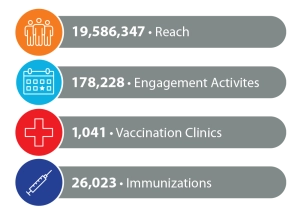
In the first two years the EXCITE projects successfully reached 19,586,347 individuals through 178,228 diverse engagement activities, as depicted below. In collaboration with partners, 1,024 vaccination clinics administered 26,023 vaccines, playing a crucial role in the program’s overall success.


Brain Science informs Communication Toolkit


Neuromarketing, rooted in brain science, is a powerful tool for Extension professionals in achieving communication goals. This scientific approach leverages insights into how the human brain processes information, enabling communicators to design content that aligns with cognitive responses.

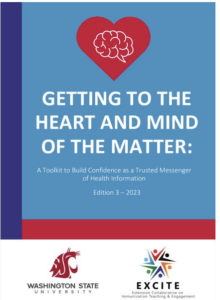
For the EXCITE project, Washington State University utilized this approach to create the “Getting to the Heart and Mind of the Matter” Communication Toolkit, addressing vaccination education needs. This toolkit, accompanied by video modules, empowers Extension professionals to engage as trusted messengers of informed vaccination communication within their communities.


What’s Next:
EXCITE received a significant boost this year, securing an additional $7,552,500 from the CDC. This funding spurred the creation of new projects, extending the program’s reach to encompass all adult immunizations.

For a more detailed insight into EXCITE accomplishments and future endeavors, we encourage you to delve into the full Year 2 report. The report not only showcases the program’s successes, but also provides valuable insights into the strategies employed and lessons learned.

Read the report here.


January 30, 2024/by mpugsley
https://extension.org/wp-content/uploads/2022/12/Extension-Foundation-Logo-padded.png 0 0 mpugsley https://extension.org/wp-content/uploads/2022/12/Extension-Foundation-Logo-padded.png mpugsley2024-01-30 19:39:522024-01-30 19:39:52EXCITE Year 2 Report Highlights: A Nationwide Success in Immunization Engagement
Page 1 of 212
Facebook
LinkedIn
Twitter
SoundCloud

Sign up for our Newsletter

Stay up to date with the Extension Foundation

subscribe

Quick Links

Find Extension in Your State
Search Extension
Impact Collaborative
Connect Extension

About
Team & Board
Annual Report
Contact Us

Membership
Campus
Ask Extension
Tools

Privacy Policy
Accessibility Statement
Terms of Use
Careers

Extension Foundation Logo

Our mission is to empower a national network of community-based educators, volunteers, and partners to turn knowledge into real-world solutions for stronger communities and people.

Terms of Use

Cooperative Extension Logo

The Extension Foundation is a nonprofit established in 2006 by Extension Directors and Administrators nationwide. Extension Foundation is embedded in the U.S. Cooperative Extension System and serves on Extension Committee on Organization and Policy (ECOP).

USDA National Institute of Food and Agriculture

This website is supported in part by New Technologies for Ag Extension (funding opportunity no. USDA-NIFA-OP-010186), grant no. 2023-41595-41325 from the USDA National Institute of Food and Agriculture. Any opinions, findings, conclusions, or recommendations expressed in this publication are those of the author(s) and do not necessarily reflect the view of the U.S. Department of Agriculture or the Extension Foundation.

Sign up for our Newsletter

Stay up to date with the Extension Foundation.

Subscribe
© 2026 Extension Foundation. All rights reserved.
  • Facebook
  • X
  • LinkedIn
  • Soundcloud
Scroll to top