Extension Foundation
  • News
    • Funding Opportunities
  • About
    • Team & Board of Directors
    • Find Extension in Your State
    • Extension Acronyms
    • Contact
  • Member Benefits
    • Current Members
    • Professional Development
    • Leadership and Team Development
    • Campus
      • Campus Procedures
      • Catalog
    • Member Solutions
    • Video Resource Library
  • National Initiatives
    • AgriProspects Workforce Development Network
    • EXCITE
    • FADI-EDEN
    • Impact Collaborative
    • National Program Action Teams
    • NextGen Technical Advising
    • New Technologies for Ag Extension
    • Pesticide Safety Education Funds Management Program
  • Tools
    • Extension Foundation AI
      • ExtensionBot
      • 2025 National AI Report
    • Ask Extension
    • National Cooperative Extension Project Websites
    • National Registry Of Cooperative Extension Programs & Assets
    • Connect
    • Search Extension
    • Team Health Dashboard
  • Publications
  • Services
    • Conference & Event Services
    • Extension Lab
  • Search
  • Menu Menu

Tag Archive for: USDA-NIFA

New Report Examines Land-Grant University Capacity to Support Outdoor Recreation Economies

News, Publications

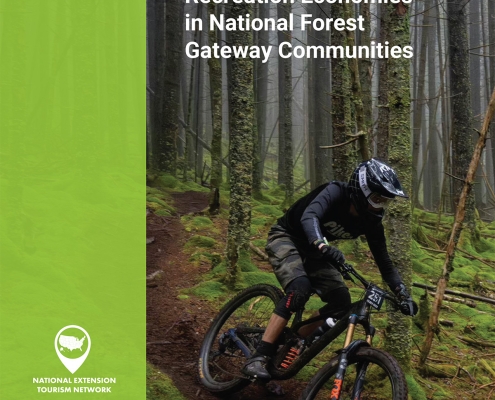
The Extension Foundation has published a new research report titled Land-Grant University Capacity to Support Recreation Economies in National Forest Gateway Communities. This study provides insights into how well Land-Grant Universities (LGUs) are positioned to promote and develop outdoor recreation economies near U.S. national forests. It also identifies specific locations that are best equipped to allocate resources for recreation economy programs.

The report aims to assess the ability of LGUs to align with a 2022 USDA memorandum of understanding (MOU), which emphasizes outdoor recreation economies as a key agency priority. Historically, recreation and tourism have not been focal program areas for Cooperative Extension, raising questions about LGUs’ readiness to engage in this space.

The assessment was conducted earlier this year by Doug Arbogast, Rural Tourism Specialist at West Virginia University, in partnership with the National Extension Outdoor Recreation Working Group (NEORWG) and the Regional Rural Development Centers (RRDCs), with support from the Extension Foundation. Funding for the project came from the New Technologies in Agricultural Extension (NTAE) program.

“In 2022, the USDA positioned the outdoor recreation economy as a top priority. Yet, LGUs have traditionally not focused their programmatic efforts on recreation and tourism,” said Arbogast. “This national assessment aimed to understand their capacity to engage in this work. Our findings reveal significant opportunities for Cooperative Extension and LGU researchers to partner with communities, fostering sustainable growth in recreation economies.”

Arbogast and his team developed a survey with input from NEORWG and RRDC members, targeting LGUs in states with national forests. They specifically reached out to Extension leaders working in Community Development program areas, gathering responses between May and June 2024. The survey explored Extension’s current and potential capacity to support recreation economy initiatives, identified research opportunities, and assessed how additional funding could expand Extension’s efforts in this sector.

The full report and associated maps are available on the Northeast Regional Center for Rural Development website.

Related Reading

  • NTAE 2023-2024 Yearbook – Q&A 
  • The NET Effect: Members of the National Extension Tourism Network Help Raise the Bar in Sustainable Tourism and Outdoor Recreation
  • NTAE – Out of the Mines Feature Story
  • NTAE – My Hometown is Cool Feature Story

Additional Publications from the Extension Foundation

The Extension Foundation continues to expand its library with new titles on topics including:

  • Creating mass media campaigns
  • Game-based education
  • Wellness strategies during challenging times
  • Curriculum innovation
  • Prescribed fire
  • Emergency preparedness and response
  • Understanding food labels
  • Building resilience for farms and farm families

Explore the complete library of Extension Foundation publications here.

October 18, 2024/by Aaron Weibe
https://extension.org/wp-content/uploads/2022/12/Extension-Foundation-Logo-padded.png 0 0 Aaron Weibe https://extension.org/wp-content/uploads/2022/12/Extension-Foundation-Logo-padded.png Aaron Weibe2024-10-18 22:20:202024-10-18 22:20:20New Report Examines Land-Grant University Capacity to Support Outdoor Recreation Economies

New Technologies for Ag Extension 2023-2024 Yearbook Now Available in the Extension Foundation Library

News, Publications

The New Technologies for Ag Extension (NTAE) 2023-2024 Yearbook is now available as the latest addition to the Extension Foundation’s publications library. This vibrant publication captures the progress of dozens of projects funded through the New Technologies for Ag Extension (NTAE)  program—a cooperative initiative between the U.S. Department of Agriculture National Institute of Food and Agriculture (USDA NIFA), the University of New Hampshire, and the Extension Foundation.

NTAE’s mission is to incubate, accelerate, and expand promising work that enhances the impact of the Cooperative Extension System (CES) in communities nationwide. It also provides scalable models that can be adopted or adapted by Extension teams across the U.S.

Spanning 72 pages and presented in an engaging, magazine-style format, the Yearbook offers a comprehensive look at how NTAE-funded projects are transforming human, environmental, and community well-being. The publication also highlights an NTAE-supported technology initiative focusing on artificial intelligence. Through illustrated feature articles, Q&A interviews, and embedded videos, readers will explore innovative efforts across key themes, including technology, climate resilience, youth development, health, and equity.

Additionally, the Yearbook highlights the critical work of ECOP’s Program Action Teams, showcasing how these teams contribute to advancing the Cooperative Extension System’s priorities.

The Extension Foundation’s library houses an extensive collection of resources, with topics ranging from technology to strengthening the resilience of farms and rural communities. Explore the entire library here and sign up to receive notifications about future publications.

October 18, 2024/by Aaron Weibe
https://extension.org/wp-content/uploads/2022/12/Extension-Foundation-Logo-padded.png 0 0 Aaron Weibe https://extension.org/wp-content/uploads/2022/12/Extension-Foundation-Logo-padded.png Aaron Weibe2024-10-18 21:27:182024-10-18 21:30:11New Technologies for Ag Extension 2023-2024 Yearbook Now Available in the Extension Foundation Library

Rediscover Food Preservation: Redesigned Website Empowers Consumers and Extension Professionals

News, Success Stories

Interest in home food preservation has surged in recent years, fueled by more time spent at home and a desire for self-sufficiency. People are rediscovering traditional methods like canning, pickling, and drying to preserve their harvests and reduce food waste. 

But with this increased interest comes a crucial need for science-based information. Safe food preservation practices are essential to avoid foodborne illness and economic loss from spoiled food. This is especially important for the growing cottage food industry, which allows entrepreneurs to turn their skills into income, boosting local economies.

The National Center for Home Food Preservation (NCHFP) has long been a critical resource for those seeking information about home food preservation, including Extension educators, consumers, and cottage food business owners. Established with funding from the Cooperative State Research, Education and Extension Service (CSREES-USDA) in 2000 as a multi-institutional effort with the University of Georgia and Alabama A&M University as the primary institutions, NCHFP reported that requests for validated home food preservation recipes shot up a whopping 620% in 2020 compared with 2019.

Thanks to funding from a USDA NIFA New Technologies for Ag Extension (NTAE) sub-award and support from the Extension Foundation, the NCHFP recently launched a redesigned website. This user-friendly resource empowers both home cooks and Extension professionals, offering clear instructions on various methods, from canning jams to fermenting vegetables. A robust resource section provides downloadable publications. Website visitors can also explore recipes and use the search function to find needed information.

Dr. Carla Schwan, Assistant Professor and Extension Food Safety Specialist at the University of Georgia, serves as the Center’s director. She noted:

“The NTAE sub-awards were instrumental in the development of our new National Center for Home Food Preservation website. It provided us with the resources necessary to enhance and add several key features, including a Newsflash feed, a dedicated educators page with exclusive content for Extension professionals, and an enhanced search function. Without this sub-award, completing this project wouldn’t have been possible.

Throughout the process, the NTAE team has been incredibly supportive and helpful. Key individuals such as Aaron Weibe, Fred Schlutt, and Tira Adelman were particularly instrumental in guiding us and providing valuable resources. Their expertise and dedication made a significant difference in the success of our website development initiative.“

A network of Extension professionals is building capacity

The demand for best food preservation practices inspired a group of Extension professionals to create a consortium to organize and expand their work. Specialists in home food preservation, small food businesses, and consumer and retail food safety from 13 Southeastern states launched the Food Safety Extension Network (FSEN) in 2021 to raise general awareness of the importance of preserving food safely and to be a resource for home cooks, small, independent food retailers, and home-based food preparation businesses. FSEN is building capacity, so that other universities can also contribute content and resources to the NCHFP website. You can learn more about FSEN’s’s work in this story, featured in the 2023 NTAE Yearbook. Participating institutions are University of Arkansas, Clemson University, University of Florida, University of Georgia, University of Kentucky, North Carolina State University, Oklahoma State University, University of Tennessee, Virginia Tech University, Fort Valley State University, University of Maryland, Louisiana State University, Mississipi State University, Auburn University, and Alcorn State University. 

Dr. Schwan is involved in FSEN and notes, “The NTAE grant started this synergistic collaboration and we hope that by the end of it, we will have collective products and outcomes to share with consumers.” 

Visit the website NCHFP website here. 


Related Reading:

Community is Our Jam

Buy, Cook, Eat Local

April 19, 2024/by Aaron Weibe
https://extension.org/wp-content/uploads/2022/12/Extension-Foundation-Logo-padded.png 0 0 Aaron Weibe https://extension.org/wp-content/uploads/2022/12/Extension-Foundation-Logo-padded.png Aaron Weibe2024-04-19 16:37:242024-04-19 16:43:30Rediscover Food Preservation: Redesigned Website Empowers Consumers and Extension Professionals

Extension Professionals Unite at Historic Climate Action Convening

Events, Impact, News, Success Stories

“The Extension system is a catalyst for climate science by helping people adopt practical applications for climate actions for their farms, families, communities, and businesses. This convening demonstrated those strengths at every turn, bringing together Extension professionals from every region, from every type of Land-grant university: 1862, 1892, and 1994 institutions, and from all career stages (faculty to county educators/agents). Through individual brainstorming, group discussions, and action planning, participants at the Climate Action Convening identified specific outcomes they will work to deliver, along with the inputs, outputs, and actions needed to achieve those bold promises. 

With their deep community connections, Extension professionals understand how the power of human-centered collaboration – underpinned with research-based approaches to deliver practical everyday applications – help people adapt, mitigate, and build resilience to a changing climate, allowing individuals organizations, and communities to thrive.”

                                        – Dr. Jason Henderson, Climate PAT Co-Chair


As an atmospheric river intensified by climate change bore down on the West Coast, more than 40 Extension professionals from across the U.S. and outlying territories gathered in Tucson, Arizona for Cooperative Extension’s first national Climate Action Convening. 

A central question guiding the gathering was: “How can we mobilize the U.S. Cooperative Extension system to quickly and effectively contribute to climate change solutions?

Hosted by the Extension Committee on Organization and Policy’s Climate Program Action Team (Climate PAT), the event’s primary objectives were to:

  • Gather and strengthen the network of climate-focused leaders in Cooperative Extension,
  • Formulate a climate action plan that will empower Extension, and
  • Provide CES with direction to seek funding to develop climate change programs. 

The Climate Action Convening was a coordinated effort between Climate PAT leadership team members, with the Extension Foundation providing support. The planning team included Climate PAT Co-Chairs, Roy Beckford (University of Vermont) and Jason Henderson (Iowa State University), Sylvie Brouder (Purdue University), Laura Edwards (South Dakota State University), Ros McCann (Utah State University), and Carrie McKillip (University of Illinois). This convening was supported through a USDA National Institute of Food and Agriculture, Agriculture and Food Research Initiative Competitive Grants Program award number 2024-67019-41467, Foundational and Applied Science Program 2023-08732. Iowa State University Extension provided additional funding through a generous sponsorship. 

The gathering brought together individuals from 1862, 1890, and 1994 institutions and leaders from the USDA. Through focused conversations, participants identified opportunities in three areas where Extension is uniquely suited to deliver climate change adaptation and mitigation solutions: communities, natural resources, and working lands. 

Virtual Pre-Conference Events and Responsive Planning Created a Successful In-Person Gathering

The planning committee held two virtual events before the convening, featuring presentations from climate change experts and grounding discussions designed to orient attendees to the purpose and desired outcomes. Participants shared their goals for the convening, which enabled organizers to optimize the event to deliver on those objectives. 

At the in-person event, participants broke into groups focused on communities, natural resources, and working lands. Facilitators guided attendees through activities designed to capture co-created insights and identify areas of opportunity.

Using Insights and Feedback to Create a Climate Action Plan

Using insights gathered at the Climate Action Convening, Extension Foundation and collaborators will co-create a series of logic models. These logic models will be incorporated into a white paper about the outcomes Extension believes it is best positioned to achieve through active and new climate programs, projects, and resources. The anticipated release date for the white paper is Spring 2024.

The white paper will be accompanied by a communications plan that answers this question: “How might Extension best communicate about its climate change vision – specifically, the ways in which Extension can be a solution – both internally and externally?”  The communications plan will include a combination of key messages, processes, and strategies. The materials are being drafted by Nate Birt, the 2024 Climate PAT Fellow. Birt shared, “It is encouraging and exciting to see leaders across Extension coming together for climate action by co-creating key outcomes they can work toward. Extension has unparalleled scientific, outreach, and engagement expertise and a proven track record of multi-stakeholder collaboration and measurable positive impact.”

Finally, a distribution strategy will articulate intended processes for soliciting feedback on the white paper and the communications plan. This will ensure that Extension professionals – those who attended the convening, and many who did not – are able to quickly begin making progress toward the outcomes identified in the white paper. 

Future convenings are envisioned to maintain and build momentum. They will bring Extension professionals together to assess progress, identify opportunities, and communicate to USDA and other key partners and funders about the work underway and the impact it is having. If you’re interested in learning more, please contact Regan Emmons, Climate Partnership and Development Assistant, at climatepat@extension.org

Key Takeaways

There was consensus that this moment represents a key window of opportunity for Extension to make climate impact and to secure significant investment to advance these outcomes. Collectively, participants identified nine climate change outcomes that they feel the overall system is best positioned to work toward. 

One participant noted: 

“This was a historical convening as it included representatives from the 1860s, 1890s, and 1994s PLUS key leaders from USDA. These key leaders – Bill [Hohenstien], Kevin [Kephart], Lynne [Knight], and Adam [Wilke] – not only presented but remained throughout the convening and actively participated in the ideation and group discussions.

The planning committee and Extension Foundation did an exceptional job taking this enormous task and developing a format that required individual participation and “presence.” These individuals also set the tone for respectful sharing of ideas and concerns, and facilitated the groups with patience and focus on the outcomes. A superb job by all involved! Thank you for making this happen and for your leadership on our next steps.”


Another participant said,

“I went in with few expectations but many hopes. I think the planning committee did an excellent job of guiding the conversations, with emphasis on the overall conversation. My primary hope was that we could find enough agreement to move forward with the findings of the convening. I believe we did and will.”


Dive Deeper

The Climate PAT has developed a suggested reading list, which was shared with Climate Action Convening participants. Click the links below to learn more.

  • Climate Change Roadmap, Colorado State University. Pg. 5 – Executive summary, Pg. 19-39 – Cross-Cutting Themes & Exemplar Climate Change Insights, Pg. 40 – Summary & Conclusion.
  • USDA Strategic Plan 2022 – 2026, Pg. 7-12 – Strategic Goal 1 – Combat Climate Change to Support America’s Working Lands, Natural Resources, and Communities.
  • USDA Science and Research Strategy 2023 – 2026, Pg. 23-28 Priority 2: Driving Climate-Smart Solutions.
  • NIFA 2022-2026 Strategic Plan, Pg. 7 Strategic Objective 1; Other strategic objectives are cross-cutting and we recommend becoming familiar with them.
  • 5th National Climate Assessment, Overview, National Topics (Pick 2-3), Regions – Review your regional chapter; Responses (Adaptation and Mitigation).
  • Project Drawdown Solutions 
  • National Academies – Accelerating Decarbonization in the United States,  Executive Summary; Other chapters of your choice, such as Energy and Equity, Land Use, etc.


Related Reading:

The Extension Foundation suggests these titles from its Publications Library:

  • Extension Climate and Extreme Weather Programming: Successes, Challenges and Opportunities – Report
  • The Resilient Agriculture: Weather Ready Farms 
February 14, 2024/by Aaron Weibe
https://extension.org/wp-content/uploads/2024/02/IMG_7209.jpg 874 1753 Aaron Weibe https://extension.org/wp-content/uploads/2022/12/Extension-Foundation-Logo-padded.png Aaron Weibe2024-02-14 16:52:202024-02-20 16:10:50Extension Professionals Unite at Historic Climate Action Convening

Extension Foundation Releases Three New Titles

Announcements, News, Publications, Success Stories

Three new titles are available on the Extension Foundation’s website. The brief publications – written as magazine-style feature stories – share project work funded through the New Technologies for Ag Extension (NTAE) program, a cooperative agreement between USDA NIFA, Oklahoma State University, and the Extension Foundation. NTAE’s goal is to incubate, accelerate, and expand promising work that will increase the impact of the Cooperative Extension System (CES) in the communities it serves, and provide models that can be adopted or adapted by Extension teams across the nation. 

Each of the publications is excerpted from the New Technologies for Ag Extension 2022-2023 Yearbook, an 83-page magazine, which shares how these grant projects improve human, environmental, and community health. 

  • West Virginia University Extension – “My Hometown is Cool.” Educators at West Virginia University Extension have created a toolkit to teach youth how to be community developers and entrepreneurs. This publication provides a brief overview of how the program works and what the creators hope to accomplish with this exciting program.


  • West Virginia State University – “Out of the Mines.” This publication shares how an NTAE project team is focused on helping rural communities in West Virginia capitalize on historical and natural resources, to compensate for the dwindling coal-based economy. Extension professionals from West Virginia State University planned to pilot the concept in Kimball, West Virginia. In this story, you’ll learn why this effort is critical for southern West Virginia and what the team hopes to accomplish. 


  • University of Massachusetts, Amherst – “Capacity Building – Expanding Urban Extension.”  A University of Massachusetts Extension team plans to train up to 10 UMass Extension educators to engage more effectively with underserved and urban audiences in a wider range of communities in Springfield, Massachusetts, and across the state. The team will also partner with a variety of community organizations to develop resources and programs that use and build on the strengths of this broader target audience. This publication provides a brief overview of the program’s goals and strategies.

The Extension Foundation carries dozens of titles in its library. Four to five additional publications are slated to hit the shelf each week through the end of November. Sign up to receive publication notifications here. You can find the entire library of publications here.

October 30, 2023/by Aaron Weibe
https://extension.org/wp-content/uploads/2022/12/Extension-Foundation-Logo-padded.png 0 0 Aaron Weibe https://extension.org/wp-content/uploads/2022/12/Extension-Foundation-Logo-padded.png Aaron Weibe2023-10-30 16:00:262023-10-23 20:07:08Extension Foundation Releases Three New Titles

Extension Foundation Receives USDA-NIFA Award to Maximize Biosecurity Threat Resilience

News

The Extension Disaster Education Network (EDEN) is a collaborative network of Cooperative Extension educators across the United States and territories who work to improve the delivery of education and information, and the availability of resources related to disaster preparedness, response, and recovery. Historically, this grassroots network has been aligned with the Extension Committee on Organization and Policy (ECOP) and supported by USDA-National Institute of Food and Agriculture (NIFA) through the Food and Agricultural Defense Initiative (FADI) grant.

The Extension Foundation in partnership with Washington State University, Iowa State University, and the Cooperative Extension System, will support the administration of the EDEN project. The Extension Foundation assists in aligning system-wide formal work to increase system capacity while providing programmatic services. This partnership will help Extension programs scale and investigate new program implementation methods and models.

The project will build upon and expand related outputs and deliverables of previously funded FADI-EDEN projects by maintaining a competitive grant process to support innovation and curriculum development and directed funding for 1890 and 1994 Land-grant institutions. The continued leadership with additional support from Extension Foundation will ensure the implementation of the strategic plan for EDEN developed under the previous FADI-EDEN grant administration. By doing so, the project will contribute to the ongoing efforts of the FADI-EDEN program to enhance the capacity of Extension professionals to provide research-based information and educational programs to communities across the United States in response to disasters.

This project aims to support the coordination and implementation of EDEN’s strategic plan focusing on disaster management education, targeted communication and outreach, strategic structure, and management growth. Success hinges on strengthening participation and collaborations throughout the Cooperative Extension system and strategic partnerships and enhancing the education and professional development opportunities centered on interdisciplinary expertise and multi-state education and outreach programs that provide national consistency with local flexibility, a hallmark of Cooperative Extension. In addition, success is based on using Extension Foundation services and infrastructure to serve as the backbone supporting EDEN. The goals of this project include:

  • Support EDEN Strategic Structure and Management Growth
  • Expand Disaster Management Education
  • Strengthen Targeted Communication and Outreach

According to USDA-NIFA, “the goal of the Food and Agriculture Defense Initiative Extension Disaster Education Network (FADI-EDEN) program is to maximize the resilience of the U.S. food and agriculture sector to biosecurity risks, extreme weather events and disasters, cyber threats, and other shocks. It is necessary to mitigate threats to sustain the overall competitiveness of U.S. agriculture to maintain an abundant food supply for people and livestock; to support the farmers, ranchers, and workers who drive the U.S. food and agriculture sector; and to sustain the vitality of rural communities, rural and urban agriculture infrastructure, and agricultural businesses. The FADI-EDEN program funds one Extension project that will address its priorities.”

More information and the full news release from USDA-NIFA can be found here. 

July 20, 2023/by Aaron Weibe
https://extension.org/wp-content/uploads/2022/12/Extension-Foundation-Logo-padded.png 0 0 Aaron Weibe https://extension.org/wp-content/uploads/2022/12/Extension-Foundation-Logo-padded.png Aaron Weibe2023-07-20 14:53:112023-07-20 14:53:11Extension Foundation Receives USDA-NIFA Award to Maximize Biosecurity Threat Resilience

EXCITE Launches Implementation Phase for 33 Immunization Education Projects/37 Land-grant Universities

News, Newsroom

Cooperative Extension has been given the opportunity to continue immunization education work through the Extension Collaborative on Immunization Teaching and Engagement (EXCITE). The Extension Foundation, in cooperation with the Extension Committee on Organization and Policy (ECOP), through an Interagency Agreement with the USDA National Institute of Food and Agriculture (NIFA) and the Centers for Disease Control and Prevention (CDC) are funding the Cooperative Extension System to increase vaccine confidence among rural and other underserved communities.  Extension Collaborative on Immunization Teaching and Engagement

This new funded effort builds on the success of two prior projects since 2021 including the EXCITE Vaccinate with Confidence Communication Campaign, and competitively-selected EXCITE Pilot Projects. For the new Implementation Phase, 33 projects from 37 institutions have been awarded, including five institutions that are new to EXCITE. These projects represent all six regions of LGUs. EXCITE serves all Land-grant Universities (LGUs) and all were invited to apply. 

The Implementation Phase expands the project scope to include all adult immunizations and COVID-19. The overarching goals of the new phase of EXCITE is to enhance the accessibility and acceptability of local adult immunization opportunities for rural populations through strategic partnerships, while also instilling greater confidence in LGUs to provide effective COVID-19 immunization education. The CDC has identified two priorities for the EXCITE projects in this Implementation Phase. The projects must serve a rural and medically underserved population, and they must have a public health partnership.

The Implementation Phase is an 18-month educational campaign, characterized by community engagement and close collaboration with public health partners. To support the participating teams, a mentoring/coaching model will be implemented, providing valuable guidance and assistance throughout the project. Furthermore, quarterly professional development workshops will be conducted to foster continuous  learning and sharing among the teams.

The objectives of the new Implementation Phase of EXCITE as are follows:

  1. Increasing partnerships with local departments of public health with special emphasis placed on those at the local level.
  2. Increasing positive perception of public health partners and vaccine providers of the value of collaboration with Extension
  3. Changing attitudes and beliefs within LGU’s about adult immunization will lead the organization to become an asset model focused on building early adoption and innovation leaders in adult immunization education
  4. Assessing best practices for adult immunization in rural communities through National Convening and three selected pilot projects

Below is a list of institutions receiving funding for the Implementation Phase:

Aaniiih Nakoda College
Auburn University
Blackfeet Community College
Central State University
Clemson University
Cornell University
Florida A&M University & University of Florida
Institute of American Indian Arts
Lincoln University
Mississippi State University
North Carolina State University
North Carolina A&T State University
Ohio State University & Texas A&M University
Pennsylvania State University
Purdue University
Southern University
Tennessee State University
Tuskegee University
United Tribes Technical College
University of Arkansas
University of California System
University of Delaware
University of Georgia
University of Idaho
University of Illinois
University of Kentucky
University of Maryland
University of Minnesota
University of the District of Columbia
Utah State University
Virginia Polytechnic Institute & Virginia State University
West Virginia State University & West Virginia University

ABOUT EXCITE

Extension Collaboration on Immunization Teaching and Engagement (EXCITE) is a nationwide local response by U.S. Cooperative Extension made possible through an interagency agreement between United States Department of Agriculture – National Institute of Food and Agriculture (USDA-NIFA) and the Center for Disease Control and Prevention (CDC) and a cooperative agreement with the Extension Foundation in partnership with the ECOP Health Program Action Team. 

Extension Foundation Role

On behalf of the Cooperative Extension System, the Extension Foundation serves as Principal Investigator, provides grants administration, fiscal, operational, and technological services, system-wide communication, innovation processes, wrap-around services for projects, data collection and dashboards, and partnership development for the EXCITE Program.


June 22, 2023/by Aaron Weibe
https://extension.org/wp-content/uploads/2022/12/Extension-Foundation-Logo-padded.png 0 0 Aaron Weibe https://extension.org/wp-content/uploads/2022/12/Extension-Foundation-Logo-padded.png Aaron Weibe2023-06-22 23:23:412023-06-22 23:29:52EXCITE Launches Implementation Phase for 33 Immunization Education Projects/37 Land-grant Universities

USDA Announces Funding for 33 Institutions for $262.5M Investment through NEXTGEN Opportunity

News, Newsroom

The Extension Foundation (EXF) was awarded by USDA National Institute of Food and Agriculture (NIFA) in the Fall of 2022 to serve as the Technical Service Provider for the NEXTGEN Funding Opportunity. 

According to USDA-NIFA, “…the National Institute of Food and Agriculture’s (NIFA) ‘From Learning to Leading: Cultivating the Next Generation of Diverse Food and Agriculture Professionals Program’ (NextGen) will enable eligible institutions, from New York to the Northern Mariana Islands, to build and sustain the next generation of food, agriculture, natural resources and human sciences workforce. This includes efforts to strengthen USDA’s workforce through enhanced educational support, experiential learning and exposure to early career opportunities. Eligible institutions include: 1890 Land-grant Universities, 1994 Tribal Colleges and Universities, Hispanic-serving Institutions (HSI), Alaska Native-serving and Native Hawaiian-serving Institutions and institutions of higher education located in the insular areas, as well as their partners. The $262.5 million investment will provide training and support to more than 20,000 future food and agricultural leaders through 33 project partners.”

All eligible institutions were able to utilize EXF services at no cost to help expand their capacity through proposal copy and editing, identifying partners, and strengthening their overall proposals and applications. 

Participants shared that:

  • EXF resources helped strengthen the proposal,

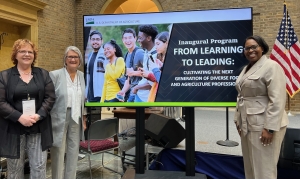
    Molly Immendorf, Beverly Coberly, and Dawn Mellion

    Pictured left to right: Molly Immendorf, Design Strategist, Beverly Coberly, Interim CEO, and Dawn Mellion, NEXTGEN Technical Advising Services Program Director

  • EXF resources helped clients cross the finish line,
  • EXF offered unique/boutique services,
  • EXF offered services based on client needs,
  • EXF resources were flexible,
  • EXF was a good partner to both the client institutions and USDA-NIFA, and 
  • Recommendations for future similar offerings.

The response to the EXF technical assistance opportunity was positively overwhelming and a success. EXF served 252 eligible institutions and partners in approximately 12 weeks. Over 90% of respondents of the post support survey would use the NEXTGEN Technical Services again and over 92% would recommend these services to other institutions. Of the 33 awarded institutions, the Extension Foundation provided services to 27. The Extension Foundation will continue to provide services to all awarded institutions during the planning and implementation of their proposals. 

A listing of institutions awarded for this funding opportunity is available here, and the full release from USDA-NIFA is available here. 

About the Extension Foundation

Our mission is to help Cooperative Extension generate a more visible, measurable, local impact.

We achieve this through our nationally funded programs made possible by member dollars and cooperative agreements with federal agencies, and through partnering on state, regional, and national initiatives with Cooperative Extension and the Extension Committee on Organization and Policy (ECOP). We serve all Land Grant Universities, regardless of membership status.

June 21, 2023/by Aaron Weibe
https://extension.org/wp-content/uploads/2022/12/Extension-Foundation-Logo-padded.png 0 0 Aaron Weibe https://extension.org/wp-content/uploads/2022/12/Extension-Foundation-Logo-padded.png Aaron Weibe2023-06-21 20:03:042023-06-21 20:03:40USDA Announces Funding for 33 Institutions for $262.5M Investment through NEXTGEN Opportunity

Starting October 3rd! NEXTGEN Grant Support Introduction and Partnership Opportunities

News, Newsroom

October 3rd, 2022, 5:30 PM – 7:00 PM Eastern Time
October 4th, 2022, 8:30 PM – 10:00 PM Eastern Time
October 5th, 2022, 4:30 PM – 6:00 PM Eastern Time
October 6th, 2022, 7:30 PM – 9:00 PM Eastern Time

REGISTER HERE

The Extension Foundation was selected by USDA-NIFA to serve as the technical service provider for NEXTGEN to raise awareness of the program and provide technical assistance for eligible institutions to develop teams, partners, program strategies and to connect with USDA and other career opportunities.

This webinar will provide an overview of grant support resources available immediately to streamline the application process, create compelling applications, and help with potential partnerships for the NEXTGEN grant. You are welcome to attend as many of these as you would like. You do not need to attend all of the webinar dates and times available, please choose one(s) that are most convenient for you. Visit our website at nextgen.extension.org.

About NEXTGEN

The primary goal of the From Learning to Leading: Cultivating the Next Generation of Diverse Food and Agriculture Professionals Program (NEXTGEN) is to enable 1890 Land-grant institutions, 1994 Land-grant institutions, Alaska Native-serving institutions and Native Hawaiian-serving institutions, Hispanic-serving institutions, and insular area institutions of higher education located in the U.S. territories to engage, recruit, retain, train, and support students to help build and sustain the next generation of the food, agriculture, natural resources, and human sciences (FANH) workforce including the future USDA workforce. NEXTGEN-supported projects should enable student scholarship support, meaningful paid internships, fellowships, and job opportunity matching, and also facilitate opportunities to learn the processes and pathways leading to training and employment in the federal sector.

About the Extension Foundation

The Extension Foundation was formed in 2006 by Extension Directors and Administrators. The Foundation partners with Cooperative Extension through liaison roles and a formal plan of work with the Extension Committee on Organization and Policy (ECOP) to increase system capacity while providing programmatic services, and helping Extension programs scale and investigate new methods and models for implementing programs. The Foundation provides professional development to Cooperative Extension professionals and offers exclusive services to its members.

September 30, 2022/by Aaron Weibe
https://extension.org/wp-content/uploads/2022/12/Extension-Foundation-Logo-padded.png 0 0 Aaron Weibe https://extension.org/wp-content/uploads/2022/12/Extension-Foundation-Logo-padded.png Aaron Weibe2022-09-30 10:22:422022-09-30 10:22:42Starting October 3rd! NEXTGEN Grant Support Introduction and Partnership Opportunities

Extension in the 21st Century: A conversation with Chuck Hibberd

Extension, Innovation, News, Newsroom

Charles “Chuck” Hibberd is an emeritus professor of the University of Nebraska, where he held several academic positions, including Dean of Cooperative Extension. His email tagline reads “Chuck Hibberd, retired Extension Director (but not done yet).”

Dr. Chuck Hibberd. Image credit: University of Nebraska-Lincoln.

He directed the University’s Panhandle Research and Extension Center for 13 years. Chuck also served as Extension director, associate dean of agriculture, and assistant vice president of engagement at Purdue University. He began his career at Oklahoma State University as a faculty member in the animal science department. A former chair of the Extension Committee on Organization and Policy (ECOP), Chuck was inducted into the NIFA Hall of Fame in 2019. Chuck currently serves on the board of the Nebraska Community Foundation.

A native of Lexington, Nebraska, Chuck received his BS in agriculture (animal science) from the University of Nebraska-Lincoln and his MS and Ph.D. degrees (animal science and animal nutrition, respectively) from Oklahoma State University. 

Chuck recently finished his first year as an Extension Foundation Catalyst. Catalysts are Extension experts who support New Technologies for Ag Extension (NTAE) projects chosen to participate in Extension Foundation’s project accelerator program. This program is part of a cooperative agreement with USDA-NIFA. In Year One (2019), the Extension Foundation selected 4 projects for participation. In Year Two (2020), 8 projects were chosen from among 33 competitive nominations across the Cooperative Extension system. Year Three projects will begin in Fall 2021. You can learn about past NTAE projects here.

We recently sat down for a conversation about his work as a Catalyst and what he thinks might lie in Extension’s future.


Can you tell us a little about your work as an NTAE Catalyst?

This was my first year as a catalyst. I enjoy working and interacting with people and helping them achieve their dreams and goals. Early in my career, I was an advisor for undergraduate students at Oklahoma State University. I learned early that these kinds of conversations are never about me but rather always about the person I am interacting with. It takes sincere listening and seeking to understand and connect in some genuine way to know where people are and where they want to go. 

I used the same approach with my leadership team in Extension (twice in Nebraska and once in Indiana). I don’t believe in top-down leadership; I believe in consultative leadership, and I want decisions to be informed by the best thinking of the team of people I surround myself with. 

I learned a great deal about coaching and mentoring while serving in Nebraska Extension. About twenty years ago, the organization decided it wanted administrators to be better coaches and mentors. We went about the business of identifying three employees who became certified professional performance coaches. These individuals led workshops for those who desired to be a more effective coach/mentor. I was in the first cohort. That experience changed my view of the way we should interact with people genuinely. It’s not only being authentic but having a method and process. 

Performance coaching has three components. First is clearly identifying and articulating the problem, issue or opportunity. Then, listening, seeking to understand. Asking powerful questions to help individuals find their own solutions is critical. I don’t propose solutions but rather ask the kinds of questions that encourage people to dig deep to consider what they want to do and how they might accomplish their work. A third and essential part of coaching is accountability. As I draw near to the end of the first conversation, I might ask, “When can I check in to see your progress?” There is a scientific method to coaching and mentoring that I bought into early, which I’ve tried to use throughout my career. I’ve used this same approach in interviews with potential employees and when working with constituents. It’s an integral part of my interactions with NTAE fellows and teams: asking reflective questions that encourage them to consider their challenges, experiences, and opportunities. I have found these sorts of reflective practices one of the most potent ways to connect with people.


What results/impacts have you seen?

Every fellow and every team is different. They have different project aspirations and are starting in a different place. One team I worked with initially designed, developed, and delivered the project four years ago; another team worked together for two years before NTAE. Two of the teams [I worked with] are relatively new and, in one case, are really still in the formation phase of their development. 

It’s a fun thing for me to interact with these people, listen, coach and mentor them, and ask powerful questions that help them get from their point A to their point BCD. While every team is unique, each has progressed in this NTAE project year. They have progressed differently because they have other interests and aspirations. That’s what this experience is about.

Some have struggled. This is hard work. I’ve seen people be emotional and have experienced their deep questioning of themselves, their team, and their project. I’ve also seen them all move forward. One of the things Extension Foundation is doing is pushing these teams to achieve their potential, whatever that is for them. One of the most rewarding things for me is to watch a fellow/team take what was an idea, aspiration, or hope and turn it into something better than they ever could have imagined because of the input and resources that the Extension Foundation offers. I don’t think many people thought about market research as a real thing they could do. Instead, they’ve had a chance to use market research to better design how they engage learners, improve program delivery, or the circumstances under which they create learning examples. That’s just one example. There are many more services that our key informants (KIs) offer. They really inspire fellows and teams to think differently about their work. 

Every one of our KIs is an Extension professional. They are well-trained, well-educated, highly experienced with great insight. They have so much to offer fellows and teams. While each KI has a specific role, they may also have perspectives and experiences beyond that that add value. Extension Foundation is surrounding fellows and teams with people who care, are smart, and are experienced. These folks have a servant mentality: they do whatever they can to help fellows and teams achieve their dream, their aspirations. It’s an enjoyable environment to work in.


You spent decades in Extension, in many places, working at many levels. What have been the most significant changes you’ve seen during your career? 

In my first twelve years as a faculty member at Oklahoma State, I did not have an Extension appointment. I had a research and teaching appointment. Yet, I did a lot of Extension work because the research, experiences, and relationships built in the classroom put me in a position to share in various settings – mostly Extension settings – our research and what we were learning from that work. 

My first job in Extension was as a director/administrator of an Extension and research center in Scottsbluff, Nebraska. It was a natural and easy transition from my work in a teaching and research role. I will always be a teacher. It doesn’t matter whether I’m working with an NTAE fellow and team, a student, an employee, or interviewing someone for a job…I’m teaching and learning. That drives me forward. 

In retrospect, much of my early Extension work – in 1994 in the Panhandle region of western Nebraska –  was very transactional. It was important work, but it was transactional, characterized by “sage on the stage,” one-way delivery, here’s the answer/strategy/method, take it or leave it kind of work. It was low engagement with learners and constituents. 

A fascinating thing happened about five years into my tenure at Scottsbluff. We had a crackerjack research and Extension team working on sugar beets. They were globally known for their expertise and accomplishments.  A sugar company approached us with a request to run trials to demonstrate our technology side-by-side with twelve farmers growing sugar beets using the company’s guidelines. We applied our technology and equipment, using our research knowledge and experience. Not a perfect scientific method, but that’s what we had. At the end of the season, the farmers beat us in eight of the twelve trials. 

Humbling, right? What it really meant is if we were going to be effective in our roles, we couldn’t do to or for, but with. We needed to expand our relationships, build trust, and find ways to engage people. That kind of strategy has been a theme of mine throughout my career: it’s an engagement and transformational practice based on relationships, trust, and mutual benefit –  all those things that make the work more powerful. 

In my last eight years as dean and director of Extension in Nebraska, we hired about 80 people. In the old days, most of these folks would have come with some sort of Extension or 4-H experience, which gave them a good sense of the job they were interviewing for. By 2012, that was not the case. People were coming to Extension because they saw an opportunity to engage people; co-develop solutions and strategies; work together with clients and constituents, and develop more robust solutions than ever before. The people we hire now are very aspirational, are continuously learning, are very entrepreneurial in how they approach and resource their work, and create things that have never been created before. 

If you want to change the world, Extension is a good place for you to work. You will have that opportunity to do work that matters. I see incredible talent, inspiration, and drive in Extension today. I see that everywhere. Extension organizations are finding and hiring people that have this mindset. It’s exhilarating.


How can Extension best prepare for periods of disruption? Are there particular skill sets or mindsets that you think Extension professionals should develop?

The first and most crucial part is that we focus our efforts on things that matter. We need to bring diverse resources (people and expertise) from inside and outside of the organization to bear on those really critical questions, challenges, and opportunities facing our constituents. And we need to do it in partnership with them. That has been one of the most powerful innovations I’ve seen in Extension: creating co-learning environments. If we discount the knowledge and experience of those in the communities we work with, we’re going to get it wrong most of the time. So let’s work together and learn together. We’ve changed our field days in Nebraska. We’ll put together a panel of 4-5 people, and 3-4 of those will be non-Extension folks: farmers, industry representatives, or other partners. Everybody has knowledge, perspective, and experience.

I think we build resilience by working on important issues, by working together in partnership with our constituents to build trust and create mutual benefit. At the end of the day, we want to say that we couldn’t have done what we did without our partners and have them say the same about us. That creates true mutual benefit and value.

COVID has challenged us to do that better than ever before. We had to prove that we could pivot. In Nebraska – and I would guess it was the same in most places  – there was a cadre of Extension professionals who took what they always did and just moved it to Zoom. But there were a large number of Extension professionals who created something new. They figured out how to use technology in really engaging ways and how to do blended programs using technology and engagement strategies that protected people from the pandemic and created robust learning experiences. So many inventive solutions and techniques were developed, deployed, and learned from during the pandemic. This has been another way Extension demonstrated that we could pivot. I’m not sure we could have done this thirty years ago. It’s partly due to hiring, ingenuity,  and the bottom-up approach most Extension programs are using today. We can pivot, adapt, and keep going.

The Scott Reeds of the world have figured out that Extension can’t just be for the college of agriculture. It needs to be for the entire university and function as the land-grant universities’ lead engagement arm. Extension should strive to build partnerships and capacity across the whole campus. Doing that well means Extension is positioned as the go-to organization and not just focused on outreach. Extension work should be about genuine engagement that results in deep relationships and reciprocal benefit. We have to engage locally in trust-based opportunities.

The land-grant universities that are taking advantage of those ideas are the ones that are positioning Extension to be highly valued as a critical component of the larger university.


Where do you think opportunities lie for Extension now and in the future?

The pace of change is so fast that we really need to design ways to stay even with – or get in front of (when possible) – the kinds of advances that are occurring. We have to be open to the reality that advances that will benefit Extension and our constituents are not all coming from the university system. How do we build deep partnerships and collaborations with others? We may not be the leaders; we may be key participants or play another role.  

The Centers for Disease Control (CDC) enlisted Extension Foundation to work on vaccine hesitancy as one of its partners. These kinds of things happen because of relationships. The CDC has deep expertise but doesn’t have the 3,000+ county network to deliver the education and engagement pieces necessary to address this question of vaccine hesitancy. Extension does.

I serve on the Nebraska Community Foundation (NCF) board. NCF – unfettered by any of the rules or regulations of working for a university – is doing fantastic development work on the ground in communities across Nebraska. Nebraska Extension has developed a powerful collaboration with the NCF, sometimes in partnership with and sometimes in service to that organization. 

I think we’ll find going forward, if we want to continue to be a key player and to be viewed as resourceful, we’ll ask this: “What does it mean to be an Extension professional with a  true entrepreneurial mindset?” That’s what we’re talking about here: we’re not sitting back waiting for things to happen. We’re pushing the edge and taking risks. Our most progressive constituents want us to take risks and try things on their behalf. How do we do that in a way that takes advantage of opportunities, technologies, tools, and different ways of thinking out there right now? 

One way is to continue to remain current (and get ahead of the curve) and keep hiring people with that entrepreneurial mindset, who don’t mind failing forward, going for it, and asking for forgiveness rather than permission. Those are our opportunities. One of the things about those kinds of ideas is that it’s going to ask us as leaders to also change how we think about the work we do and how we lead our organization. The Extension organization of the future will be much more driven by our employees, the people on the ground doing the work. Our job is to create a culture and hire people who can do this kind of work. We need to try to catalyze where we can and where we can’t, get out of the way because they’re going to figure it out.


What are you particularly excited about right now?

I’ve been doing this work for almost a year. The catalyst’s role for me was deer in the headlights from August through November or December. Now I feel as if I have my arms around it. But that doesn’t mean I’m entirely comfortable in the role because I always push myself to be better in my work. But it’s incredibly fun.

I’m very curious about the next group of NTAE fellows and teams. I think there may be some very different kinds of topics and themes. Just like this year, I think we will find some fellows who push us as much as we push them and who really challenge us to think differently about how we do this work and how we support high-impact teams. This is awesome.  

Scott Reed and I have been working on framing what a new catalyst onboarding might look like. That’s been a blast. Scott, Fred [Schlutt], and Jimmy Henning created the catalyst role two years ago from scratch. Thank goodness they did that for Rick Klemme and me. We have new catalysts coming in, and I’m excited to work with them. We don’t ‘train’ new catalysts, but we try to inform and inspire (two “I” words I really like). The goal is to help them achieve what they would like to accomplish in their role as catalysts. We will continue to diversify our team and expertise.

On a different note, we were involved this week in an ECOP meeting and some APLU meetings with the APLU Board on Agriculture Assembly, composed of the deans and vice-chancellor leads for agricultural and natural resources across the country. We’ve also been in conversation with the new director  – Carrie Castille – of the National Institute of Food and Agriculture (NIFA). The discussions in this space and especially in the context of the Extension Foundation’s work are more exciting than ever before. There is a genuine openness to collaborating and working together without concern about who gets the credit. There seems to be a strong interest in invention and innovation and addressing the challenges we face trying to figure out how to do that in this complex environment in Washington DC, our land-grants, ECOP, and the Extension Foundation.

I’m really energized and very hopeful. I did that role: I was ECOP chair four years ago. One of the things we talked about a lot is that we have these big ideas. How do we make them happen? 

This year NIFA provided funding through the Extension Foundation to ECOP program priorities that will be led by people who have thought a lot about the area they are going to work in. This is new ground, a new opportunity, and a way to provide national leadership to an Extension system that needs strong, informed, and opportunistic national leadership. I’m optimistic about that as well.


What books, podcasts, etc., are currently informing your thinking?

I’m currently reading four books, including How to Be an Antiracist by Ibram X. Kendi. We just drove to and from Colorado and listened to Caste: The Origins of Our Discontents by Isabel Wilkerson. I’m also reading Forty Chances: Finding Hope in a Hungry World, written by Howard Buffet. If you want to learn to think differently about how we work with impoverished people and countries to help them improve subsistence farming and food production, you’ll find this a fascinating book.

I just finished Once a Warrior: How One Veteran Found a New Mission Closer to Home by Jake Wood. Jake is a combat veteran and the founder of Team Rubicon. This non-profit organization has created a way to mobilize veterans to respond to disasters to communities in a deliberate and organized manner. Veterans are highly skilled, and the Team Rubicon model enables them to deliver very high-level service and engagement with people suffering from disasters. It’s a fascinating book.

I also have a circle of friends and co-workers who challenge me regularly. We ask each other hard questions. I’m a continuous learner…that’s what I do! I’ve learned so much from the fellows and teams, too. Their ideas and inventiveness are part of why this work is so rewarding.


Related Reading:

A Conversation with Dr. Scott Reed, Extension Foundation Catalyst

Accelerating Success: Q&A with Dr. Fred Schlutt

August 9, 2021/by Aaron Weibe
https://extension.org/wp-content/uploads/2022/12/Extension-Foundation-Logo-padded.png 0 0 Aaron Weibe https://extension.org/wp-content/uploads/2022/12/Extension-Foundation-Logo-padded.png Aaron Weibe2021-08-09 19:43:212021-08-09 19:43:21Extension in the 21st Century: A conversation with Chuck Hibberd

Tag Archive for: USDA-NIFA

New Technologies for Ag Extension 2024-2025 Cover

New Technologies for Ag Extension 2024-2025 Yearbook

Cover image of the 2025 Extension Foundation National AI Report

2025 Extension Foundation National AI Report

Annual Report 2024

Extension Foundation 2024 Annual Report

Extension Tourism: Impact and Opportunities of Land- an Sea-Grant Programming Across U.S. Regions

Extension Tourism: Impact and Opportunities of Land- and Sea-Grant Programming Across U.S. Regions

Land-Grant University Capacity to Support- Recreation Economies

Land-Grant University Capacity to Support Recreation Economies in National Forest Gateway Communities

2024 Yearbook

New Technologies for Ag Extension 2023-2024 Yearbook

Extension Evaluation Matters

Extension Evaluation Matters: 2nd Edition

Annual Report 2024

Extension Foundation 2023 Annual Report

Healthy Teams Handbook

Healthy Teams Handbook

Teaching Youth Food Safety

Teaching Youth Food Safety – A Game-Based Experience

Page 1 of 41234
Facebook
LinkedIn
Twitter
SoundCloud

Sign up for our Newsletter

Stay up to date with the Extension Foundation

subscribe

Quick Links

Find Extension in Your State
Search Extension
Impact Collaborative
Connect Extension

About
Team & Board
Annual Report
Contact Us

Membership
Campus
Ask Extension
Tools

Privacy Policy
Accessibility Statement
Terms of Use
Careers

Extension Foundation Logo

Our mission is to empower a national network of community-based educators, volunteers, and partners to turn knowledge into real-world solutions for stronger communities and people.

Terms of Use

Cooperative Extension Logo

The Extension Foundation is a nonprofit established in 2006 by Extension Directors and Administrators nationwide. Extension Foundation is embedded in the U.S. Cooperative Extension System and serves on Extension Committee on Organization and Policy (ECOP).

USDA National Institute of Food and Agriculture

This website is supported in part by New Technologies for Ag Extension (funding opportunity no. USDA-NIFA-OP-010186), grant no. 2023-41595-41325 from the USDA National Institute of Food and Agriculture. Any opinions, findings, conclusions, or recommendations expressed in this publication are those of the author(s) and do not necessarily reflect the view of the U.S. Department of Agriculture or the Extension Foundation.

Sign up for our Newsletter

Stay up to date with the Extension Foundation.

Subscribe
© 2026 Extension Foundation. All rights reserved.
  • Facebook
  • X
  • LinkedIn
  • Soundcloud
Scroll to top