Extension Foundation
  • News
    • Funding Opportunities
  • About
    • Team & Board of Directors
    • Find Extension in Your State
    • Extension Acronyms
    • Contact
  • Member Benefits
    • Current Members
    • Professional Development
    • Leadership and Team Development
    • Campus
      • Campus Procedures
      • Catalog
    • Member Solutions
    • Video Resource Library
  • National Initiatives
    • AgriProspects Workforce Development Network
    • EXCITE
    • FADI-EDEN
    • Impact Collaborative
    • National Program Action Teams
    • NextGen Technical Advising
    • New Technologies for Ag Extension
    • Pesticide Safety Education Funds Management Program
  • Tools
    • Extension Foundation AI
      • ExtensionBot
      • 2025 National AI Report
    • Ask Extension
    • National Cooperative Extension Project Websites
    • Connect
    • Search Extension
    • Team Health Dashboard
  • Publications
  • Services
    • Conference & Event Services
    • Extension Lab
  • Search
  • Menu Menu

Tag Archive for: covid-19

In Conversation with Dr. Rick Klemme

Extension, News, Newsroom

Richard Klemme

Dr. Rick Klemme grew up on a farm in east-central Illinois. He received his BA in economics and math from Illinois State University. He later earned an MA and Ph.D. in agricultural economics from Purdue. Rick began his nearly four-decade Extension career as an agricultural economist at the University of Wisconsin-Madison (UW). He later became Dean and Director of UW Extension. Rick transitioned from that assignment to serve as the Executive Director of Extension’s Committee on Organization and Policy (ECOP), where he worked for nearly four years.

Rick recently finished his first year as an Extension Foundation Catalyst. Catalysts are Extension experts who support New Technologies for Ag Extension (NTAE) projects chosen to participate in Extension Foundation’s project accelerator program. This program is part of a cooperative agreement with USDA-NIFA. In Year One (2019), the Extension Foundation selected four projects for participation. In Year Two (2020), eight projects were chosen from among 33 competitive nominations across the Cooperative Extension system. Year Three projects will begin in Fall 2021. You can learn about past NTAE projects here.

We sat down to talk about his career in Extension, his role as a Catalyst, and what projects he’s currently working on.


Can you tell us a little about your work as an NTAE Catalyst? What results/impacts have you seen to date?

My work started about a year ago. It was a new role for me and has provided me an opportunity to engage with project teams on the ground level. The teams are from around the country and working in different program areas. 

It’s fun to watch the NTAE projects mature and develop over time and see how teams hone in on what they want to accomplish. It’s been interesting to help NTAE teams access the Extension Foundation’s team of Key Informants and build better projects. I’ve seen individuals and teams expand their horizons, grow their capacity, and in some cases, begin scaling their program work up.


What’s your assignment for this upcoming year?

I’ll be focusing on three areas. I’m tentatively working with three of the new project teams. In that role, I’ll also be mentoring new catalysts coming on board, which will be fun. The roles for catalysts and key informants will be different this year because there are more and different types of project teams.

I’m working on special projects that focus on the food system, including work with Food System 6 (FS6). FS6 supports food entrepreneurs from around the country working towards a more just and regenerative food system. Smaller producers face so many challenges: labor, climate change, market access, and many more. But they also experienced a consumer demand bonanza in 2020 due to COVID-19. For example, nearly every Wisconsin CSA farm was over-subscribed.  

It’s interesting to see how difficult it is for individual entrepreneurs to operate successfully in a landscape dominated by Sysco Foods, Wal-Mart, Costco, and other large retail chains across the country. We’re trying to find the balance of compatibility. We’re not trying to pit small local foods producers against the larger retail sector. Instead, we’re trying to figure out how they can co-exist more effectively and have products in individual and chain grocery stores. We’re also trying to address food access and food deserts, which exist in both rural and urban areas.  Even though intensive, small-scale rural farmers may be sending their products to cities, people who live in these rural communities may have trouble accessing fresh food.

Another project I’m working with involves Washington State University. It focuses on resilient communities. It’s just getting underway. Creating resilient communities is even more critical now as we face climate change, the pandemic, and a changing economy. It’s vital for both rural and urban communities. I think there is a strong potential for work in community resilience to bring people together to co-learn across the country and share what’s worked in different places. This sharing might enable us to replicate successful work in other communities.

These are exciting projects, and I’m eager for the work ahead.


You spent decades in Extension. What have been the most significant changes you’ve seen during your career? 

I’ve had several different jobs in Extension: as a faculty member, program leader, Extension leader, and then as executive director of ECOP. For most of my career, I stayed in one place (University of Wisconsin). During my time in Extension, I’ve seen many changes. On the agricultural side, farms have grown in size and complexity. Ag agents have very different jobs than 35 years ago.

Our traditional home economics field has changed, as well. It’s always been a staple of our county programs. Interestingly, we’re once again offering canning programs driven by the huge surge of interest in home and community gardening. The point is, we morphed those programs. People had to change what they did and how they taught. We needed to evolve to meet changing needs and to be current with the times. While we still have a lot of traditional programming in 4-H, we have new youth development efforts. Program areas change over time.

The great thing about Extension has been the strong legacy in agriculture, 4-H, and home economics programming. That’s also been our biggest challenge because people hang on to how we used to operate, which relied on an expert model, one on one, very practically oriented information, and vital information at the time. While providing practically oriented and vital information remains important, the educator-client relationship has shifted to reflect changing needs and information delivery methods. 

Demographics change, resulting in clientele and partners. In Wisconsin, like many other states, we’ve improved our ability to interact and engage with diverse audiences, including Hmong, Native American, Black, and Hispanic populations. We learned that the ability to understand different cultures was critically important in reaching people.  We not only engaged with community leaders, clan leaders, and tribal councils, but we also hired members of our Extension team from within those communities.

In nutrition education, we discovered that bringing community members who understand the cultural importance of food and, in some cases, indigenous foods was important. These individuals were able to integrate that knowledge into a curriculum developed by and for White populations. It represented a big step for us. We hire educators from the communities in which we work. It’s one thing to talk about inclusion and another thing to act upon it. Inclusion means engaging, listening, and diversifying the Extension workforce to reflect the communities in which we work.

If we hadn’t changed, I am not sure that Extension would still exist? 

I’ve often bragged about the growth of community development in Extension programs. In Wisconsin, we embraced community development as being very important to local communities. Having access to Extension community development resources has proven critical for some community-based organizations and local business owners. We’ve also grown urban Extension work tremendously over the last 20-30 years, working with new audiences and in different ways.

Responding to local needs, being resilient, and providing what is needed in rural and urban populations keeps Extension relevant.


Where do you think opportunities lie for Extension now and in the future?

I think many of the opportunities rely on embracing the engagement role that Extension has in communities. We’re moving from an expert model to a learning and facilitation model, an engagement model. Colleagues are realizing and incorporating local knowledge and experiences into the educational program. That’s a hallmark of successful Extension programming.

When I look at younger faculty on campus with research and Extension appointments today, I see the engagement level climb. I saw that kind of engagement many years ago, where a group of relatively few producers (potato producers, for example) knew specialists on a first-name basis. I think that was the forerunner of today’s engaged campus specialists.

I think this kind of engagement is a harbinger. One of the primary values of Extension is its ability to coalesce resources locally and do a lot of the behind-the-scenes work.


What are you particularly excited about right now?

I’m excited about the work in community resilience and food systems. I serve on the board of directors for a Wisconsin-based non-profit organization – FairShare – that works with farmers that run community-supported agriculture operations (CSAs). We’ve helped enable, empower, and provide capacity for farmers to operate locally under the umbrella of larger food chains and systems. A sustainable agricultural center that I was involved with helped the predecessor of Fair Share form as a 501c3. It’s nice to come full circle.


What books, podcasts, etc., are currently informing your thinking?

I enjoy books and documentaries that document the entry into World War II of different allied powers. I am especially intrigued with the challenges faced by leaders during that era, notably Winston Churchill and Franklin Delano Roosevelt.  I also enjoyed the PBS series Atlantic Crossing, which also centers on World War II.

I found the PBS series created by Ken Burns and Lynn Novick – The Vietnam War – incredibly informative. It demonstrates the cumulative set of errors surrounding our involvement in Vietnam and what that has meant to our nation. It’s a revealing and sad commentary that explores the importance of transparency and listening to all voices.

David Maraniss produced an excellent book about Vietnam and the 1960s, entitled They Marched Into Sunlight: War and Peace in Vietnam and America. Marranis is a Washington Post associate editor and a Pulitzer Prize winner. He’s also a Wisconsin native and a graduate of the University of Wisconsin. That book is incredibly resonant with me for many reasons, including his exploration of Vietnam activism at the University of Wisconsin-Madison campus. 

I’m also a fan of James Patterson, who writes mystery novels.


Related Reading:

A Conversation with Dr. Scott Reed, Extension Foundation Catalyst

Accelerating Success: Q&A with Dr. Fred Schlutt
Q&A with Chuck Hibberd


September 14, 2021/by Aaron Weibe
https://extension.org/wp-content/uploads/2022/12/Extension-Foundation-Logo-padded.png 0 0 Aaron Weibe https://extension.org/wp-content/uploads/2022/12/Extension-Foundation-Logo-padded.png Aaron Weibe2021-09-14 16:57:092021-09-14 16:57:09In Conversation with Dr. Rick Klemme

RFA: Extension Collaborative on Immunization Teaching & Engagement (EXCITE) Immunization Education Pilot Projects (Activity 2)

News, Newsroom

Extension Committee on Organization and Policy, Health Innovation Task Force
Extension Foundation

EXTENSION COLLABORATIVE ON IMMUNIZATION TEACHING AND ENGAGEMENT (EXCITE) IMMUNIZATION EDUCATION PILOT PROJECTS (ACTIVITY 2)

DATES: MAY 1, 2021 – APRIL 30, 2023

ELIGIBILITY: The RFA for EXCITE Activity 2 is open to all Land Grant University CES professionals. Each LGU may apply as part of an unlimited number of lead and collaborating applications for EXCITE Activity 2. At most, one project per institution will be funded, whether the institution is lead or collaborating institution on the application. There is no limit to the number of projects as part of which a principal investigator or team member may apply. EXCITE Activity 2 is a competitive process. 

TIMELINE:

  • Activity 2 RFA Published: upon receipt of the NIFA award notification
  • Activity 2 Application Due: May 14, 2021
  • Activity 2 Applications Review Process May 17-21, 2021 
  • Activity 2 Award Notification: May 24-28, 2021
  • Activity 2 Funds Distribution to Subawardees: May 31-June 4, 2021

FUNDING LIMITS: Up to $200,000 per award for 2 years. 

APPLICATION ACCESS: The application is available at https://applyextension.smapply.io/. The Application Guide and other information is available on the website at https://extension.org/immunization. 

CONTACT INFORMATION: 

Michelle Rodgers

Associate Dean and Director

University of Delaware

EXCITE Project Director

michellerodgers@extension.org


EXECUTIVE SUMMARY: The Extension Foundation, in cooperation with the Extension Committee on Organization and Policy (ECOP), through an Interagency Agreement (IAA) with the USDA National Institute of Food and Agriculture (NIFA) and the Centers for Disease Control and Prevention (CDC) are funding the Cooperative Extension System (CES) to address health disparities among rural and other underserved communities. (AWARD NO: 2021-77041-34831)

The Extension network as a trusted leader in communities across the nation is a key factor in the selection of Extension as a CDC partner. On behalf of the Cooperative Extension System and in collaboration with ECOP, the Extension Foundation serves as Principal Investigator; provides grants administration; fiscal, operational, and technological services; system-wide communication; innovation processes; wrap-around services for projects; data collection and dashboards; and partnership development. Goals of the EXCITE Program include:


  1. Address barriers and concerns and increase acceptability about COVID-19, flu and other vaccinations among rural and medically underserved audiences.
  2. Increase connection and communication between targeted communities and healthcare systems.
  3. Increase accessibility of local COVID-19, flu and other adult vaccinations and vaccination clinics.
  4. Inform CDC, USDA-NIFA, Cooperative Extension and health partners to implement public health programs to reduce health disparities.


Activity 2 Immunization Education Pilots are competitive and support up to 20 pilots, testing various methodologies to conduct immunization education programs with priority populations for all types of adult vaccinations. Funded projects will work cooperatively with the CDC, local health professionals and programs to improve immunization rates with priority populations.


The purpose is to create and test innovative delivery methods for each pilot project and inform future immunization education methodologies of best practices.Immunization Education Pilots will be developed to not only further message testing, but to learn from the selected communities about how CES, CDC, and local health professionals could work together to educate and reach PP for improved adult immunization rates in general.  Pilot projects selected for funding will ideally be diverse in geographic region, scope and delivery cost, and methods  to meet a range  of rural and other medically underserved at-risk areas and communities around COVID-19, flu and other adult vaccinations.


  • Participation in a pre-application assist workshop to develop a project including targeted population, a unique value proposition, plan for message testing implementation, and community engagement plan. Application developed with input from CDC key informants with a focus on innovative interventions.  Pilot programs will include at least 1 health partner to collaboratively develop the intervention. Approximately 20 Pilot projects to be selected
  • Awardees conduct intervention activities designed for their priority population.   Market Research will be conducted as a part of the intervention  to understand priority population views and perspectives.  Results will be shared among all Pilot projects. This will  inform a second iteration of the intervention. Teams will engage with technical assistance, key informants and team coaches. Innovative delivery methods will be dependent on the priority population and may include worksite education, train the trainer, media campaigns, development of community leaders as messengers, use of volunteers for local program delivery.  


Award and Funding Decisions–Funding decisions will be considered final.  Award decisions will be published on the EXCITE Website and emailed to each institution individually.

Training Awardees–Successful applicants will attend periodic training provided by the Project Director, Assistant Project Director and the Extension Foundation in conjunction with the CDC to ensure all funded applicants have the data and input they may need to implement their projects, and ensure proper fiscal accountability, time and content of progress reports, final reports and any other information that will assist them to successfully manage their projects.

April 28, 2021/by Aaron Weibe
0 0 Aaron Weibe https://extension.org/wp-content/uploads/2022/12/Extension-Foundation-Logo-padded.png Aaron Weibe2021-04-28 16:50:142021-04-28 16:50:14RFA: Extension Collaborative on Immunization Teaching & Engagement (EXCITE) Immunization Education Pilot Projects (Activity 2)

RFA: Extension Collaborative on Immunization Teaching & Engagement (EXCITE) Vaccinate With Confidence for COVID-19 (Activity 1)

News, Newsroom

Extension Committee on Organization and Policy, Health Innovation Task Force
Extension Foundation

EXTENSION COLLABORATIVE ON IMMUNIZATION TEACHING AND ENGAGEMENT (EXCITE) VACCINATE WITH CONFIDENCE FOR COVID-19 (ACTIVITY 1)

DATES: MAY 1, 2021 – APRIL 30, 2022

ELIGIBILITY: The RFA for EXCITE Activity 1 is open to all Extension professionals at all Land-Grant Universities (1862, 1890, 1994). For Activity 1, one application per institution is eligible to be considered, determined at the discretion of the Extension director or administrator, to help ensure the funds are aligned with the highest priority immunization efforts at each Land-Grant University for rural or medically underserved populations. Activity 1 is not a competitive process.

TIMELINE:

  • Activity 1 Application Due: May 7, 2021
  • Activity 1 Applications Review Process May 10-14, 2021
  • Activity 1 Award Notification: May 17-21
  • Activity 1 Funds Distribution to Subawardees: May 17-28

FUNDING LIMITS: In Activity 1 Immunization Education, the project will allocate $24,178 for each 1862 and $26,794 for each 1890 and 1994 respectively. This formula was provided by CDC and is based on 95% of the funding for Activity 1 allocated across all 111 institutions, and 5% allocated to just the 1890 and 1994 institutions due to their engagement with priority audiences. Funding is for one year.

APPLICATION ACCESS: The application is available at https://applyextension.smapply.io/. The Application Guide and other information is available on the website at https://extension.org/immunization.

CONTACT INFORMATION:
Michelle Rodgers
Associate Dean and Director
University of Delaware
EXCITE Project Director
michellerodgers@extension.org

EXECUTIVE SUMMARY: The Extension Foundation, in cooperation with the Extension Committee on Organization and Policy (ECOP), through an Interagency Agreement (IAA) with the USDA National Institute of Food and Agriculture (NIFA) and the Centers for Disease Control and Prevention (CDC) are funding the Cooperative Extension System (CES) to address health disparities among rural and other underserved communities. (AWARD NO: 2021-77041-34831)
The Extension network as a trusted leader in communities across the nation is a key factor in the selection of Extension as a CDC partner. On behalf of the Cooperative Extension System and in collaboration with ECOP, the Extension Foundation serves as Principal Investigator; provides grants administration; fiscal, operational, and technological services; system-wide communication; innovation processes; wrap-around services for projects; data collection and dashboards; and partnership development. Goals of the EXCITE Program include:

The Activity 1 Vaccinate with Confidence Campaign is designed to test various health messages related to Covid 19 vaccinations and test them in many locations/audiences across the country and to learn what health messages resonate with priority audiences. Vaccinate with Confidence will work primarily on messaging for Covid-19 vaccinations and seek to reduce vaccination hesitancy. Messages will be evaluated and information will be utilized to further increase vaccinations for Covid-19.

  • Identify vulnerable priority populations (PP) in specific geographical locations (county level) using existing data and CDC Rapid Community Assessment Tools
  • Identify key partners to influence and expand reach to the Priority Population
  • Identify key health partners to provide resources/ access to vaccinations for the PP
  • Conduct immunization education intervention through innovative approaches that are informed by rapid community assessment tools. The approaches will be population specific.
  • Interventions may include social media campaigns, educational delivery through trusted community leaders such as faith communities, educational sessions with pop-up immunization clinics, written and oral message points, etc.
  • Monthly reporting to the National Registry of Cooperative Extension Program and Assets (hereafter referred to as the National Registry) tool.
    • Intervention reach
    • Intervention assets
    • Partnerships developed with Extension and health care providers
    • Lessons learned and best practices summarized/communicated

Award and Funding Decisions–Funding decisions will be considered final. Award decisions will be published on the EXCITE Website and emailed to each institution individually.

Training Awardees–Successful applicants will attend periodic training provided by the Project Director, Assistant Project Director and the Extension Foundation in conjunction with the CDC to ensure all funded applicants have the data and input they may need to implement their projects, and ensure proper fiscal accountability, time and content of progress reports, final reports and any other information that will assist them to successfully manage their projects.

April 28, 2021/by Aaron Weibe
0 0 Aaron Weibe https://extension.org/wp-content/uploads/2022/12/Extension-Foundation-Logo-padded.png Aaron Weibe2021-04-28 16:47:282021-04-28 16:47:28RFA: Extension Collaborative on Immunization Teaching & Engagement (EXCITE) Vaccinate With Confidence for COVID-19 (Activity 1)

Tag Archive for: covid-19

National Extension Tourism (NET): 2021 Conference Proceedings

National Extension Tourism (NET): 2021 Conference Proceedings

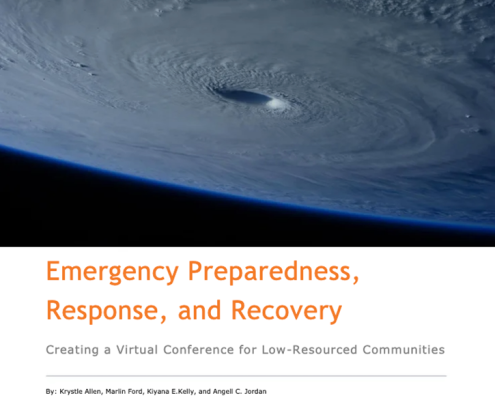
Emergency Preparedness, Response, and Recovery

Emergency Preparedness, Response, and Recovery: Creating a Virtual Conference for Low-Resourced Communities

Cooperative Extension's National Framework for Health Equity and Well Being

Extension’s National Framework for Health Equity and Well-Being

Building Farm and Farm Family Resilience in our Communities

Building Farm and Farm Family Resilience in our Communities: A Guide for Extension Professionals to Engage Strategically

Facebook
LinkedIn
Twitter
SoundCloud

Sign up for our Newsletter

Stay up to date with the Extension Foundation

subscribe

Quick Links

Find Extension in Your State
Search Extension
Impact Collaborative
Connect Extension

About
Team & Board
Annual Report
Contact Us

Membership
Campus
Ask Extension
Tools

Privacy Policy
Accessibility Statement
Terms of Use
Careers

Extension Foundation Logo

Our mission is to empower a national network of community-based educators, volunteers, and partners to turn knowledge into real-world solutions for stronger communities and people.

Terms of Use

Cooperative Extension Logo

The Extension Foundation is a nonprofit established in 2006 by Extension Directors and Administrators nationwide. Extension Foundation is embedded in the U.S. Cooperative Extension System and serves on Extension Committee on Organization and Policy (ECOP).

USDA National Institute of Food and Agriculture

This website is supported in part by New Technologies for Ag Extension (funding opportunity no. USDA-NIFA-OP-010186), grant no. 2023-41595-41325 from the USDA National Institute of Food and Agriculture. Any opinions, findings, conclusions, or recommendations expressed in this publication are those of the author(s) and do not necessarily reflect the view of the U.S. Department of Agriculture or the Extension Foundation.

Sign up for our Newsletter

Stay up to date with the Extension Foundation.

Subscribe
© 2026 Extension Foundation. All rights reserved.
  • Facebook
  • X
  • LinkedIn
  • Soundcloud
Scroll to top