25/26 Yearbook
Draft


Draft
Extension Foundation (EXF) supports the Cooperative Extension System (CES) by equipping Extension professionals with the skills, tools, and resources they need to make a meaningful impact on their communities. We do this through customized professional learning experiences, including keynote presentations, workshops, webinars, and one-on-one coaching.
The support of the NTAE grant is key to our ability to deliver professional development opportunities, and during the 2025-2026 grant year, our education and outreach team was able to reach more 544 participants with sessions covering a wide range of topics:
Reviews from webinar and conference attendees and coaching clients were very strong:
“Your teamwork presentation was incredibly informative and engaging. Thanks for sharing it with our broader team.”
—Cornell Cooperative Extension of Suffolk County
“Thank YOU! for joining us last week. I really enjoyed our one-on-one time and found your keynote presentation to be quite informative and motivational.”
—Extension dean/director
“I was able to apply today something we learned about last week. It helped me empathize better with a couple of my colleagues. Thank you for putting words to something I could feel. I can’t wait for next week.”
—Coaching client
The AI webinars resonated among attendees as the use of AI is rapidly increasing all sectors, including CES.
Across 130 participant responses collected throughout the series, 95.5% agreed or strongly agreed that the workshops provided valuable information for their Extension work. The strongest signals emerging from the data indicate growing demand for AI-supported workforce development, practical implementation resources, and Extension-specific examples that translate emerging technologies into measurable impact for communities.
Extension Foundation’s Impact Collaborative initiative continued to ignite Extension professionals, partners, and stakeholders to encourage innovation, collaboration, and a shared commitment to impact, driving change and amplifying the positive influence of Extension. New and long-standing Impact Collaborative facilitators met throughout the grant year to practice the Impact Collaborative workbook process, including the “Reflection” and “Ideation” blocks from the Impact Collaborative Workbook. These deep dives were led by trained facilitators as a peer-learning experience to enhance their understanding and facilitation techniques.
The collaborative infrastructure allowed the Workforce and Economic Development Program Action Team to develop a highly actionable and targeted plan of work after over 30 team members and relevant stakeholders convened this spring. Through the impact-driven model for program planning, the team decided to prioritize end-to-end lifelong learning and credentialing, developing CES’s positioning to reflect the existing strengths of the system, and other target goals in the coming year. Similarly, the Resilient Lands and Communities Program Action Team adapted the Impact Collaborative approach for their strategic planning session.
Many of the priority areas reflected in this year’s funded projects emerged from the Impact Collaborative process.
If you want to know what glue is best for fixing a broken ceramic plate, ask Gemini, Claude, Siri, or one of the many other AI bots at your fingertips.
If you want to know the best time of year to plant tomatoes in your area or what pest might be eating them, ask ExtensionBot.
ExtensionBot is an AI-powered information tool developed by the Extension Foundation which will give you an answer pulled directly from trusted, research-based information from Extension publications and Land-grant university resources. By detecting the IP address of your computer, the tool can loosely identify what state you live in and provide properly contextualized information from location-specific resources.
Made possible by financial support from New Technologies for Ag Extension (NTAE), ExtensionBot is a primary example of the innovative work the Foundation is doing to ensure that Extension professionals and the communities they serve are equipped with the tools they need to thrive.
During the 2025-2026 NTAE grant year, the chatbot and MERLiN—the system that aggregates and continually updates the data the chatbot pulls from—improved their performance, expanded their reach into the universe of Extension expertise and knowledge, and logged more conversations. The Foundation has prioritized this focus on AI not only to help the general public find reliable answers more quickly but to make sure that Extension organizations can make even better use of the knowledge they already produce.
The Foundation is not doing this work on its own. It is collaborating extensively with a growing number of Extension directors and administrators as well as the Extension workforce.
Through workshops, convenings, and general discussions, the Foundation and its partners are identifying the strategies, policies, tools, and infrastructure the Cooperative Extension system needs to remain a trusted resource in a rapidly changing AI-driven environment. To take a deeper dive into the insights the Foundation has gleaned from this collaboration, read the 2026 National AI Report.
This report was a groundbreaking national study that examined leadership perspectives on AI readiness in the Cooperative Extension system, followed by workforce perspectives on AI adoption and readiness, and the study was able to deliver findings that provide an initial road map for Cooperative Extension and other sectors about AI readiness and adoption in a national system.
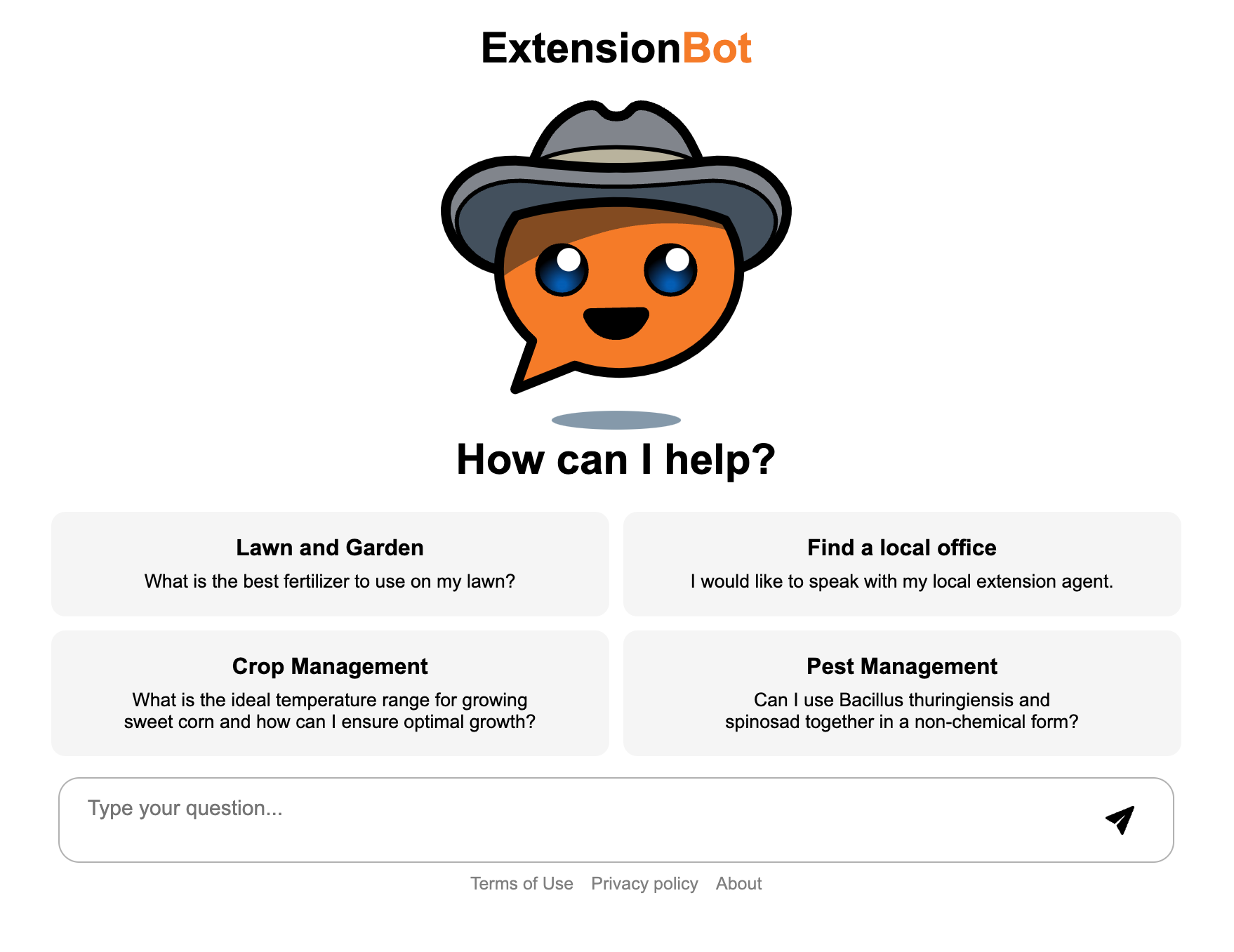
ExtensionBot is currently the top-performing chatbot for horticulture questions, outperforming all other AI models, as reported by AgriBench.
ExtensionBot is continually growing and evolving as the artificial intelligence models improve and more Land-grant Institutions embrace the technology. The team added data from an additional 20 LGUs in this grant year. There was an approximate 20% decrease in total conversations, yet conversations lasted about 60% longer and referenced 146% more CES works. While the team suspects a change in how the system counts conversations may be responsible for the decrease, the other trends show that users are having more thorough exchanges while being connected to almost 2.5x more Extension resources.
| 2024/2025 | 2025/2026 | |
|---|---|---|
| CONVERSATIONS | 28,287 | 22,703 |
| RESPONSES | 53,557 | 85,600 |
| EXTENSION RESOURCES CITED | 55,142 | 135,699 |
| INSTITUTIONS’ DATA INCLUDED IN MERLIN | 30+ | 50+ |
Our economy increasingly operates on the assumption that everyone has the digital skills and access to high-speed internet that have become almost mandatory for living our lives. Generally, we need to have convenient, reliable, robust web access and be tech-savvy enough to search and apply for jobs, access training and education, and participate in other essential activities.
Plenty of Americans—particularly those in low income brackets and those in rural areas without broadband—lack sufficient tech skills or high-speed web access or both.
Equipping Cooperative Extension to help close this digital skills and broadband access gap is why the National Digital Extension Education Team (NDEET) exists, and with NTAE grant support it has made significant progress.
During the 2024-2025 NTAE grant year, NDEET studied how best to address broadband and digital skills needs and set goals around three priority areas it believes will have the biggest chance of leveling the technology playing field:
In this grant year, the team deepened its understanding of what it can do to have the most impact in each of these areas. Here are some highlights:
AI is rapidly, fundamentally changing our relationship with technology, and there’s no way for every Extension educator to keep up with all these changes on their own. Fortunately, there are plenty of AI experts throughout Cooperative Extension. (See related story on Extension Foundation’s leadership in the AI sphere in our Annual Report.)
During this grant year, NDEET’s AI working group built a directory of these experts and existing AI educational material. This directory is available to all Extension educators, allowing them to tap into the system’s rich expertise or offer their own expertise to other educators.
Ultimately, this will allow Cooperative Extension to be a trusted, human-powered AI resource for their communities.
The cybersecurity awareness training developed by NDEET was as eye-opening for the team as it was for the Ag Agents who delivered it this grant year.
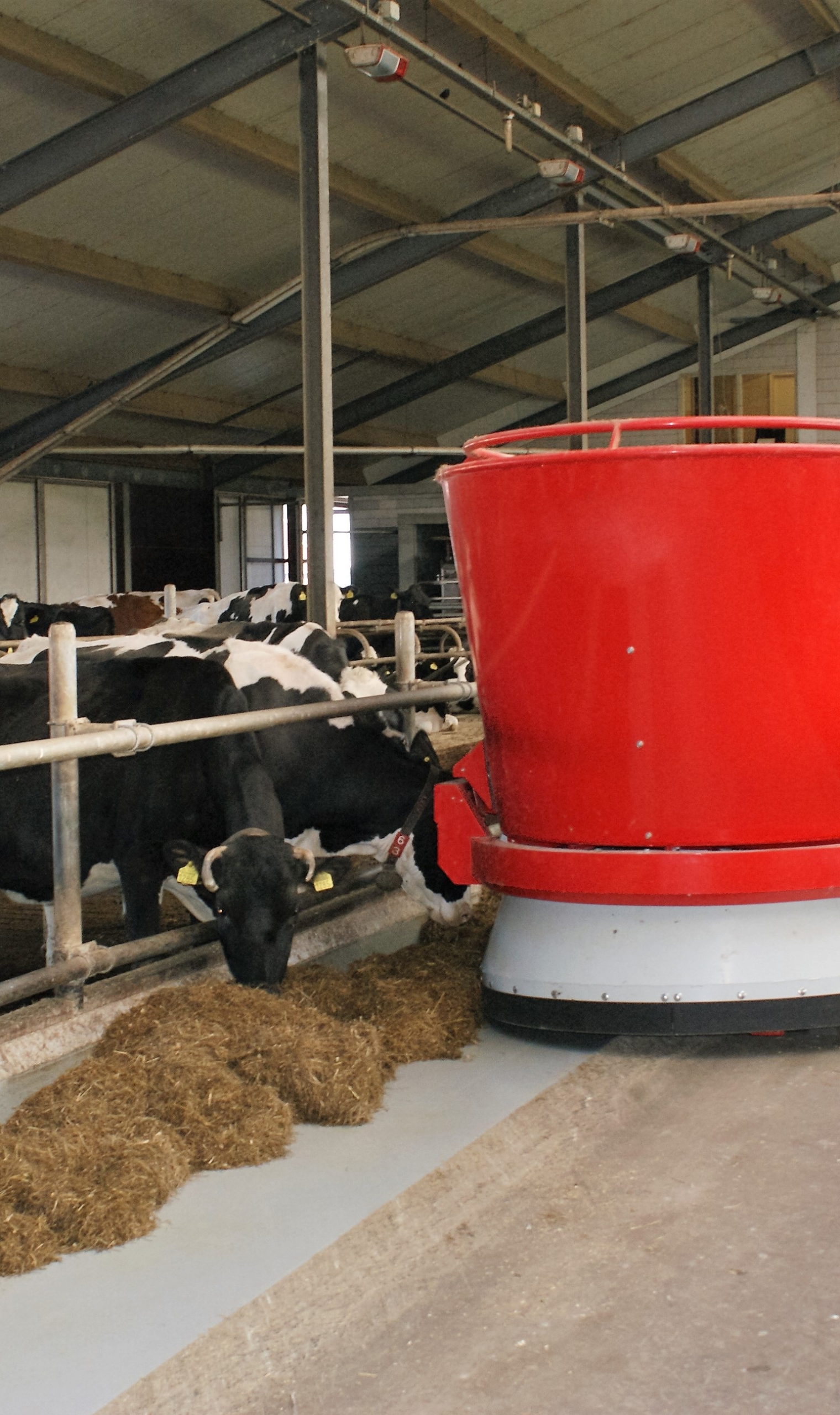
Farmers in at least one session reported that cyberthreats don’t always come from foreign actors—they can come from other farmers. One producer shared that a competing farm had hacked into his mobile feeding app and changed the amount of feed dispensed to his cattle, making them sick. In other sessions, educators learned that many farmers are even more reliant on certain technology, like GPS-led tractors, than they thought, meaning they are quite susceptible to GPS hijacks.
These insights will inform how NDEET revises the awareness workshop and how it develops future training.
Read more about the team’s project specifically to help farmers fight cyberthreats.
NDEET’s economic development working group contracted with a professor at the University of Missouri who will help create a guide that helped Extension educators to extract and analyze national labor data from federal agencies.
There are third-party vendors that extract and analyze this data, but subscriptions to their content are often prohibitively expensive. The impact of having this analytics guide is that educators are able to access and analyze freely available labor data and skill forecasts. This helps them determine what digital skills people in their communities need to get jobs in major industries in those communities and develop relevant workforce-oriented digital training guides.

So many areas of the country—even those formerly not prone to extreme weather—are facing relentless floods, wildfires, and other natural disasters these days. As these events become more frequent and intense, it is critical for communities to have strategies not just for surviving them but for bouncing back after them.
The Resilient Lands and Communities Program Action Team spent this third NTAE grant year strengthening Cooperative Extension’s ability to support communities as they create and refine these strategies.
According to team members, the most significant outcome of this team’s work, was the realization that they did not need to reinvent the resilience planning wheel. There is robust resilience work happening across Extension and within the communities it serves. It’s just not always labeled as such.
These communities don’t always need a new program or process, they just need help connecting the resources, expertise, relationships, and organizations they already have.
The toolkits, guides, and other resources the Resilient Lands PAT created this year are in many ways centralized repositories of existing extreme weather response programs and best practices—now available under a common umbrella to communities across the country.
By the end of the grant year, the working groups had finalized or were close to finalizing the following:
In addition to realizing that they didn’t have to start from scratch to build these resources, the Resilient Lands members experienced a shift in their understanding of resilience. They came to see it as a much broader systems issue involving policies, infrastructure, natural resources, networks within communities, economic conditions, and the ability of people and institutions to work together. This insight came during their September 2026 convening during a discussion about resilient food systems. What initially appeared to be a conversation about agriculture or natural resources only quickly grew into a conversation about how food systems require supportive policies, reliable infrastructure and natural resources, economically stable producers and households, and strong community networks. This realization also highlighted an opportunity for Cooperative Extension to connect expertise across program areas and help communities develop more comprehensive solutions.




During the 2025-2026 NTAE grant year, Extension professionals who focus on workforce development gathered in person for the first time to participate in a formal planning process to determine how the system can be a national leader in that space.
Organized by the Economic and Workforce Development Program Action Team, the three-day convening drew representatives from 16 Land-grant universities as well as participants from nonprofits and industry. PAT leaders say the event allowed high-level workforce development specialists to make stronger connections with each other and begin to develop a shared vision of themselves as key players in economic development initiatives.
Participants also identified three tangible next steps they believe will keep the momentum of the convening going:
Just as it has always been a critical resource for the agriculture sector and has become one for such areas as public health and technology, Extension is also well-positioned to be a significant resource for building resilient, sustainable economies.
Extension is well-positioned to be a significant resource for building resilient, sustainable economies.
The vision: A future where urban communities are equipped and empowered to reduce food loss and waste, create thriving sustainable food systems, and produce urban-grown food that reaches more consumers.
The progress: During the 2025-2026 NTAE grant year, the Sustainable Urban Food Systems Program Action Team’s working groups have
These are just a few of the results of this PAT’s work in the last year, as it moved closer to its ultimate goals of reducing food loss and waste by 50% by 2030 and expanding urban food production.
The PAT working group in charge of the West Philly project also
Evaluation was a high priority for the Sustainable Urban Food Systems PAT this year, as well. Both working groups created surveys to gather data on their programs’ effectiveness:
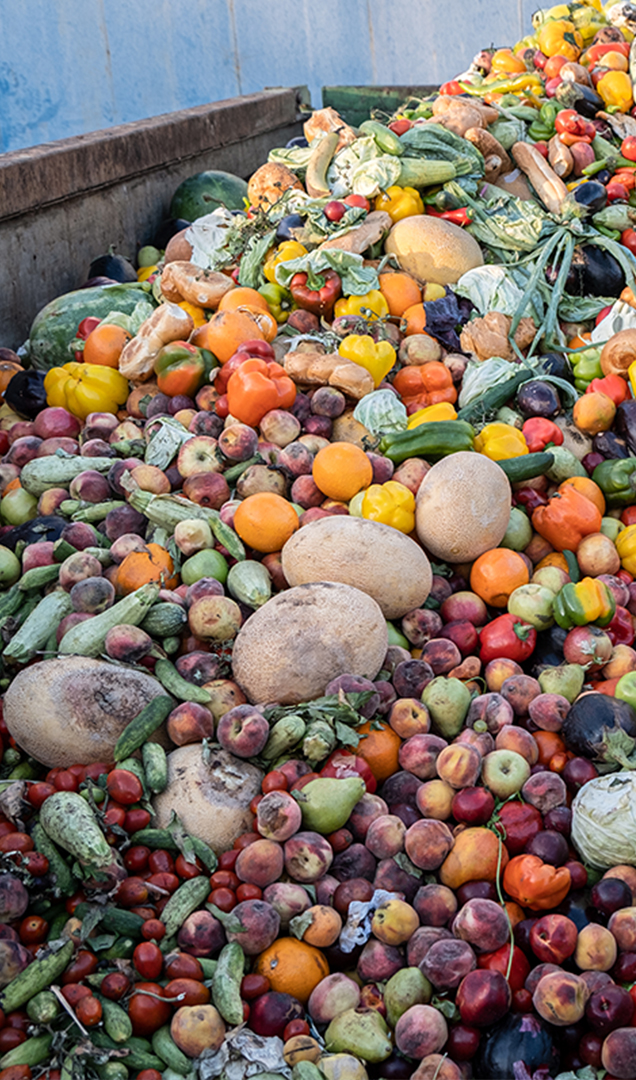

Read more about the food loss prevention pilot here.
Thanks to the diligent work of the team, the Health and Well-Being group has graduated from a Program Action Team to a Program Leadership Committee. These committees provide sustainable system-wide leadership to a defined body of Extension programming; cultivate skills, tools, resources, and partners that can expand and deepen impact at a national scale; and collect data around common measures of activity and outcomes indicators
Program Action Teams working groups had the opportunity during the 2025-2026 grant year to apply for funds to develop or implement programs identified in their strategic plans. In January 2026, the projects below were awarded NTAE funding and support from Extension Foundation experts. As each group continues to make progress toward its ultimate goal, several of these groups have been able to continue their work beyond the grant period; the Foundation will update this article with their progress in the coming months.
The overall project goal is to produce a toolkit with national best practices for forming partnerships and having meaningful discussions, as well as templates for developing strategic plans for mitigating the effects of extreme weather. The working group team expects to have a complete toolkit by December 2026.
The goal of this project is to strengthen Extension’s capacity to support communities as they navigate increasingly variable weather conditions. To do that, project team members have revised a national curriculum library for Extension professionals to use in their local programming. In the third quarter of 2026, they piloted two of the course modules with approximately 60 Illinois Extension staff.
This project’s goal is to to develop a scalable, community-led urban food system planning framework in West Philadelphia that can be replicated in other communities and inform future Extension programming and investment decisions. As of the third quarter of 2026, the project was on track to achieve this goal, while exceeding expectations in participation from local communities, Extension collaboration, and network development.
This team’s grant-year goal has been to establish and execute a data-driven process for assessing digital skill needs and applying the results to determine current gaps in the Extension curriculum. The team has finalized its methodology guide and completed the gap analysis.
This project’s objective is to foster grassroots engagement, minimize food waste, and increase food access while providing evaluation data to inform broader food system strategies, positioning Cooperative Extension to be a national leader in food system sustainability and improving resilience.
The goal for this project is to develop and pilot a set of foundational, farm-focused cybersecurity awareness and training resources that can be used by producers, Extension professionals, and agricultural partners to improve basic cyber hygiene and reduce vulnerabilities associated with digital agriculture technologies.
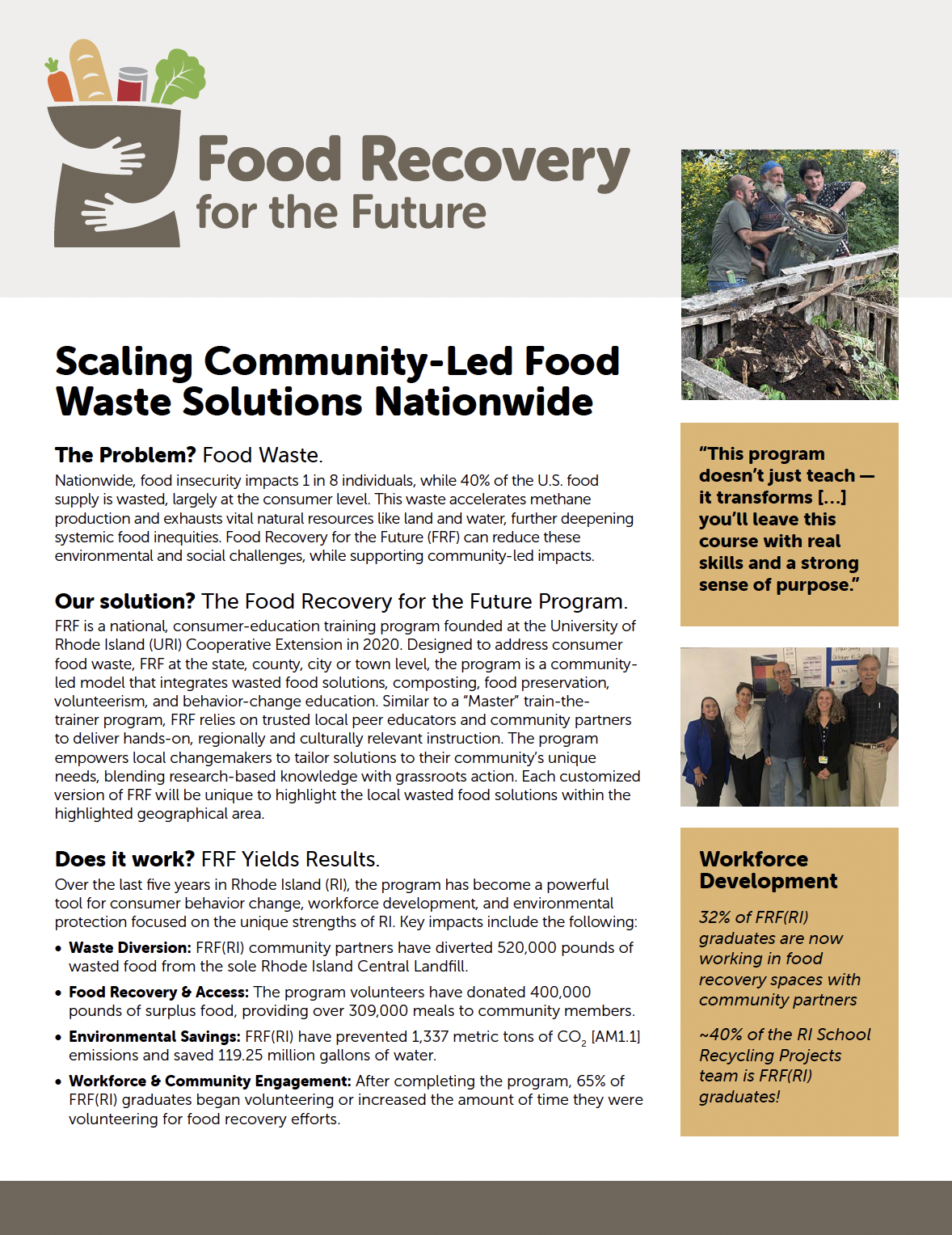
Food Recovery for the Future (FRF) is a national, consumer-education training program founded at the University of Rhode Island Cooperative Extension. Designed to address consumer food waste, the FRF community-led model integrates wasted food solutions, composting, food preservation, volunteerism, and behavior-change education.
The project’s goal during the grant period was to lay the foundation for national expansion of the model, which has been operating in Rhode Island for five years and has had a significant impact:
With NTAE funding and Extension Foundation support, the project team created a pilot program—which included developing an online training course, an instructor’s guide and resource repository, and a program evaluation tool—based on the Rhode Island model that any Extension team in the country could adapt for its own communities. More than 80 food system professionals across 30 states and Washington, D.C., expressed interest in adopting the FRF model—with Maine, Illinois, and Washington state being the most likely pilot sites over the next year.
Food Recovery for the Future will foster grassroots engagement, minimize food waste, and increase food access while providing evaluation data to inform broader food system strategies, positioning Cooperative Extension as a national leader in food system sustainability and extreme weather impact mitigation.
“CyberPest Management for Farmers” is an initiative to help farmers, Extension professionals, and other agricultural partners improve basic cyber hygiene and reduce vulnerabilities associated with digital agriculture technologies.
During this grant year, the project’s goals were to develop and pilot a set of foundational, farm-focused cybersecurity awareness and training resources, test those resources with farmers and Extension educators, and establish the initial framework for a scalable, statewide, and national cybersecurity education effort.
With NTAE support, the team was able to achieve those goals and build an online hub to house the resources, which provide guidance for protecting connected farm equipment, financial accounts, business records, and other digital systems that have become essential to modern agriculture.
The hub includes the following resources:
The potential impact of this project is significant: Farm-related cyber incidents are far more than technology problems. They can disrupt everything from irrigation to feeding to equipment access. Attacks can also shut farmers out of their production records, reveal sensitive information, and steal money.
The CyberPest Management team’s work gives farmers the awareness and tools they need to reduce their risk in the face of an unfortunately growing threat.




Stay up to date with the Extension Foundation.